No-code application development low-code no-code application development is transforming the way businesses design, build, and deploy software in a rapidly changing digital economy. Companies are moving beyond traditional development cycles and are moving towards no-code platforms to cut down on costs, shorten time to market, and give power to non-technical members of the team. No-code services work best with startups that have MVPs to fund, businesses that need to modernize their systems, and agencies that have clients that need quicker solutions. No-code can enable long-term growth, not a shortcut, when combined with Java web development services, Python software development company, or custom software agency, in a strategic way. This guide discusses the process of selecting the most suitable no-code platform depending on your business model, scale, as well as future roadmap.
Why No-Code Platforms Are No Longer An Option?
The digital transformation is not the preserve of tech-first companies anymore. All organizations, irrespective of the industry, require applications that will support workflows, connect with customers, process data, and automate business. Nevertheless, there are some problems with traditional development:
- Long development timelines
- High engineering costs
- Restricted availability of developers.
- Increasing maintenance sophistication.
No-code platforms are the solution to these issues by enabling businesses to be able to create applications visually using pre-configured components, logic flows, and integrations. The shift becomes possible to accelerate the experimentation process, constant improvement, and optimize the correspondence between the business objectives and the realization of technology.
Top 10 No-Code Platforms That Are Best Fit For Your Business
1. Bubble
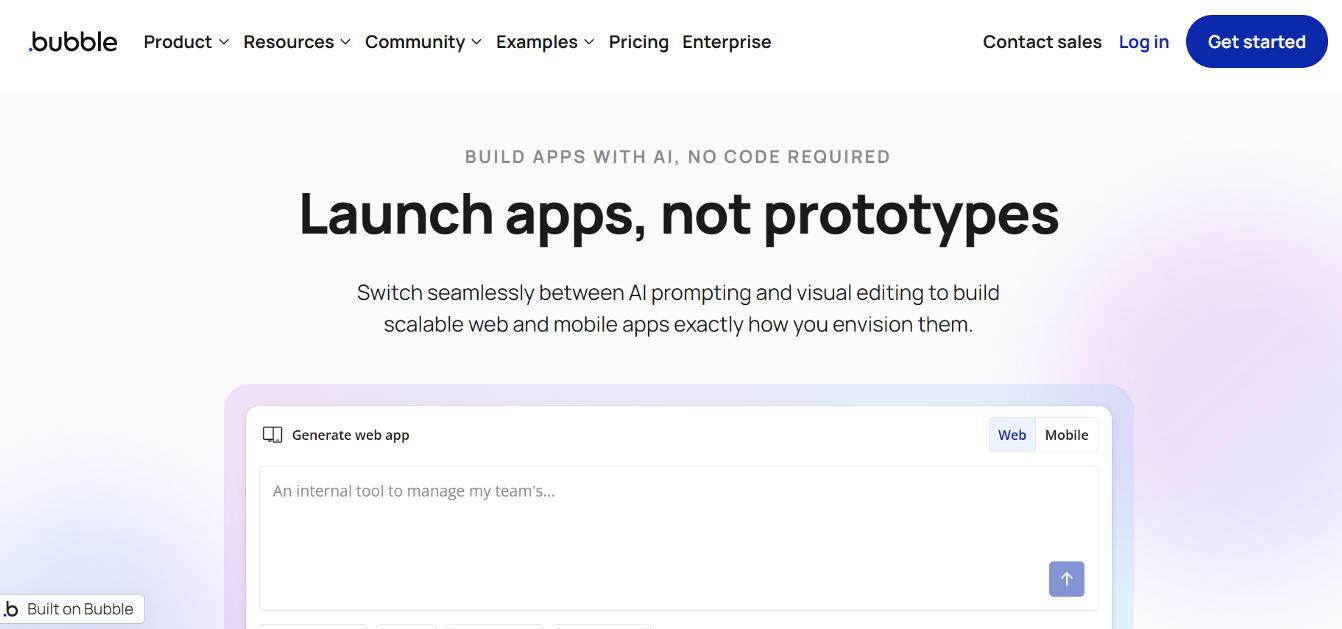
Bubble is an advanced no-code tool that allows creating fully functional web apps with no code. It enables the user to design multifaceted workflows, database administration, and third-party API integration with the help of a visual editor. Bubble, particularly, is well-liked by startups and founders making SaaS products, marketplaces, and internal tools that demand custom logic and scalability.
2. Webflow
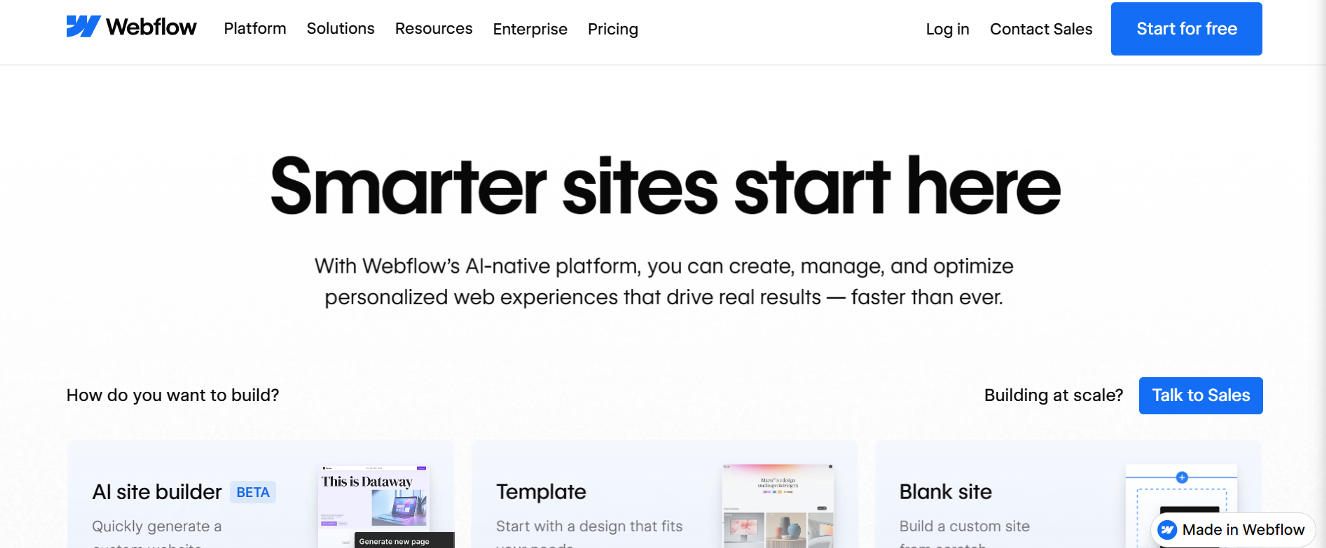
Webflow is a no-code, visual design, high-performance, and SEO-oriented web and CMS platform. It provides layouts, animations, and content structure full control to designers and marketers whilst providing hosting and security as a silencer. Webflow is suitable for use when marketing websites, landing pages, and content-driven sites require speed and design customization.
3. Airtable
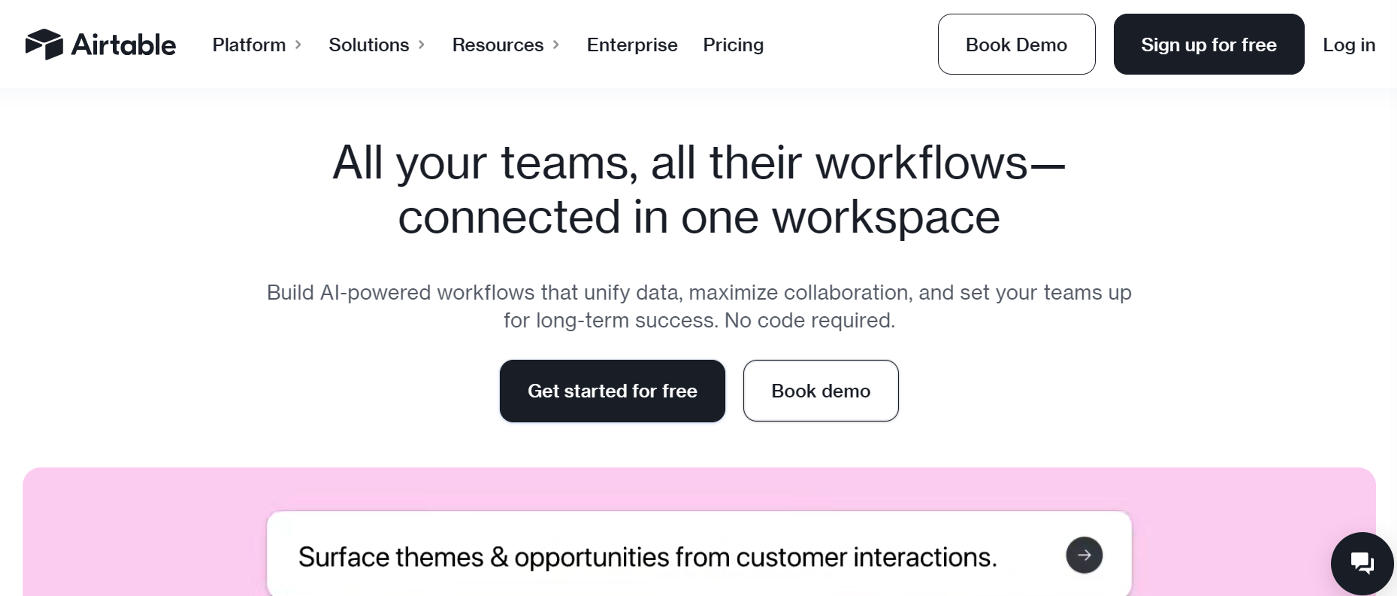
Airtable is a spreadsheet with the functionality of relational databases. It also allows teams to manage data, automate processes, and develop lightweight internal applications with little technical knowledge. Airtable is a tool that business people frequently utilize in project management, customer relationship management, and inventory management, as well as collaborative operations.
4. Zapier
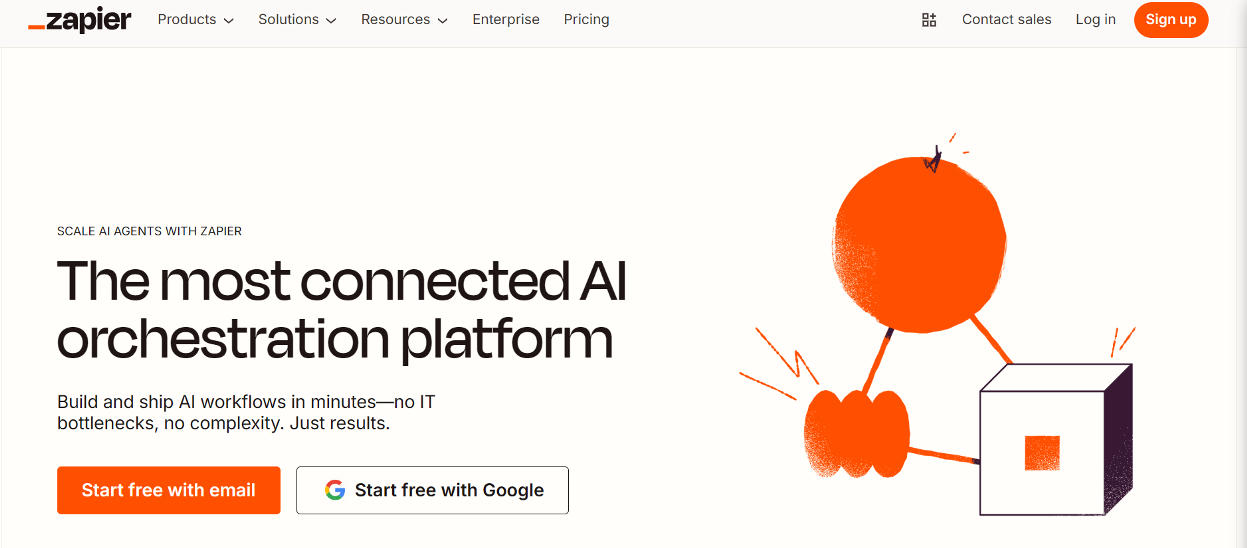
Zapier is an automation platform that eliminates the need to write any code, allowing thousands of applications to be interconnected and used to automate repetitive tasks. It allows users to set up an automated workflow, known as Zaps, which can be activated by different tools, such as CRM, email service, and project management apps. Zapier is favored among the companies that are concerned with efficiency in operations and general process automation.
5. Adalo
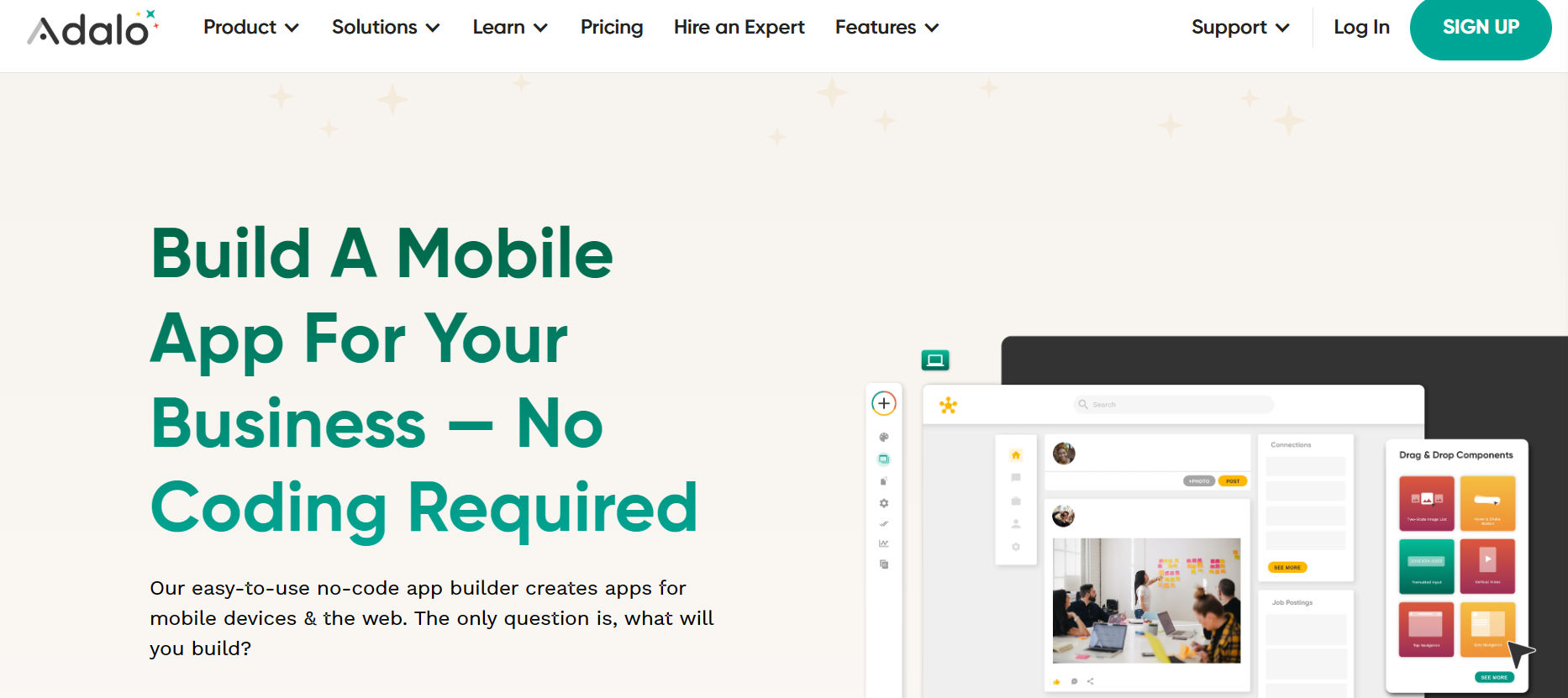
Adalo is a drag-and-drop mobile and web application development platform that is no-code. It enables users to build interfaces, build app logic, and release to app stores without code. Adalo is popular among entrepreneurs and small teams who launch mobile MVPs and customer-facing apps within the shortest possible time.
6. OutSystems
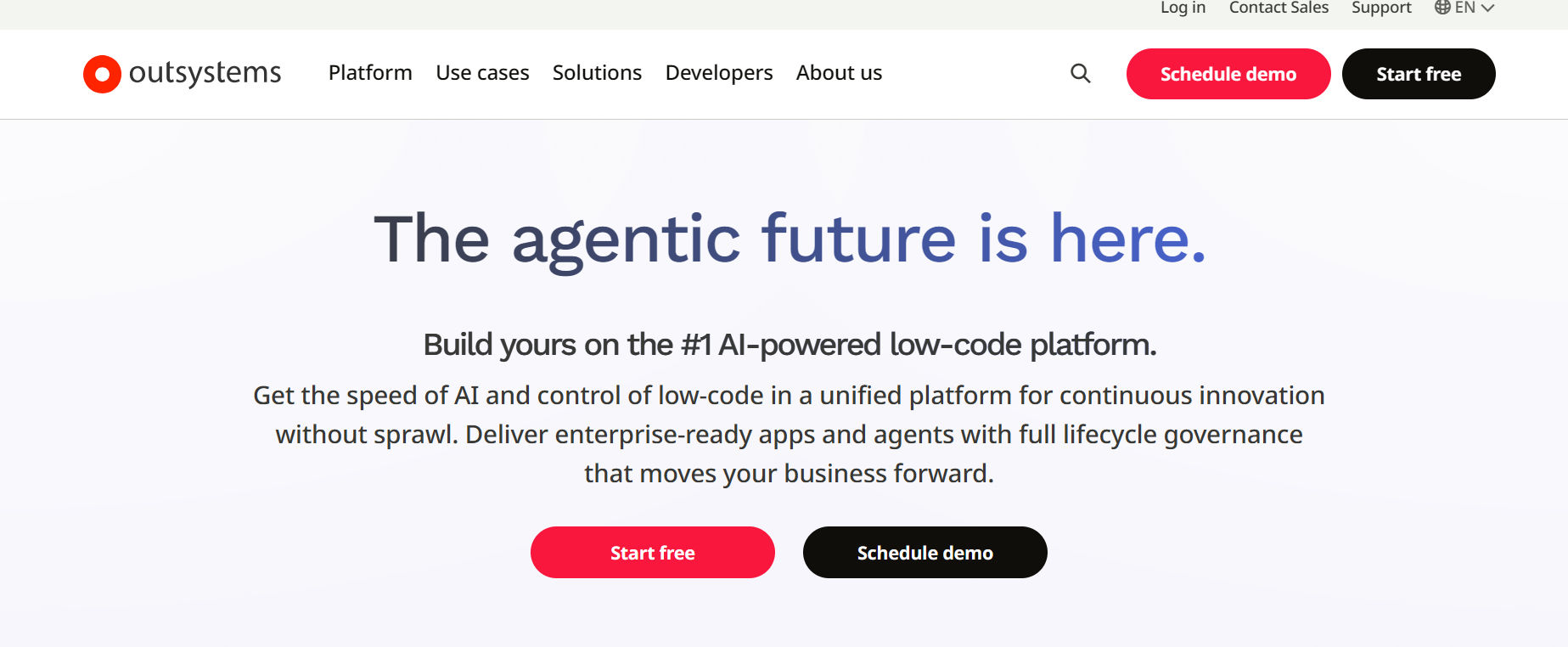
OutSystems is a scalable, secure, low-code system that is enterprise-grade. It also upholds complex working processes, integrations of systems, as well as advanced business logic with governance and compliance. Large organizations that desire faster development but still need to integrate with Java and Python-based enterprise systems commonly use it when developing applications with OutSystems.
7. Make (formerly Integromat)
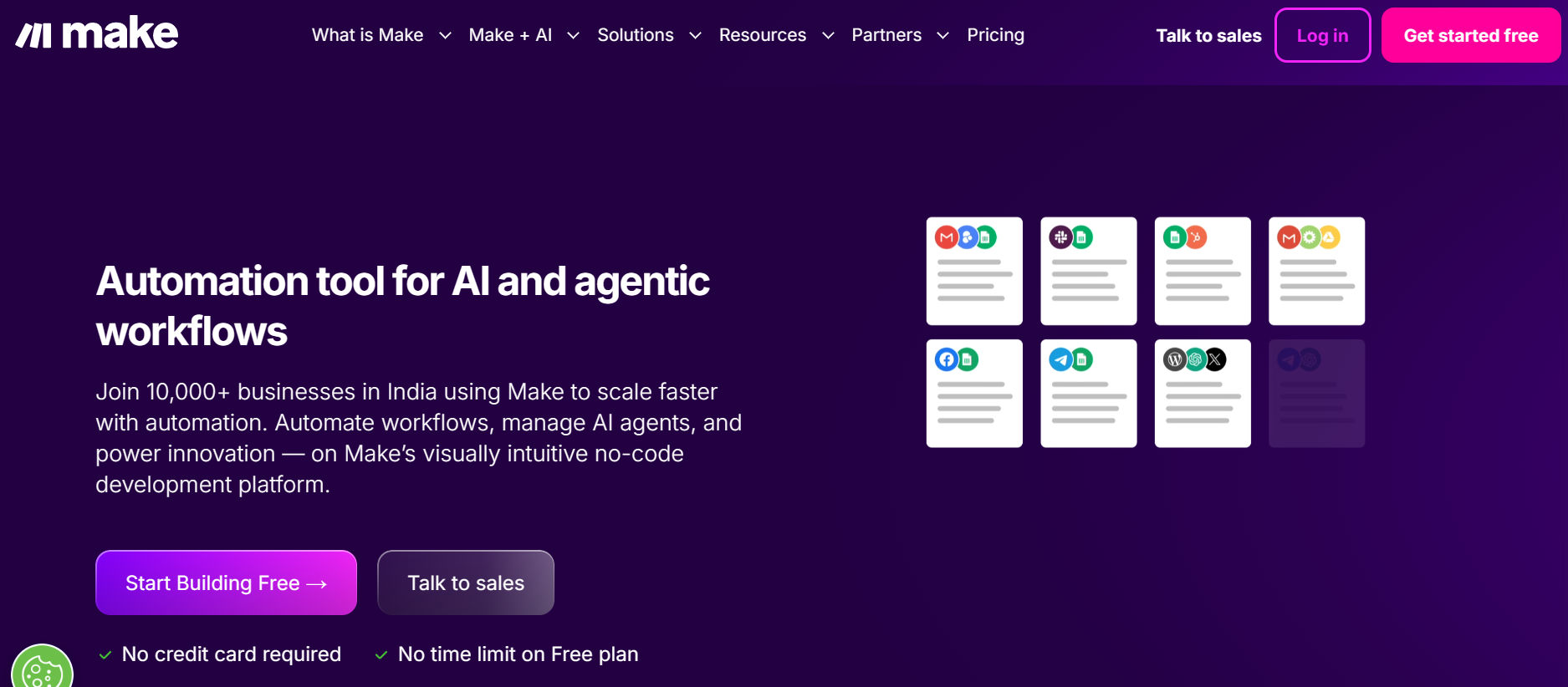
Make is a graphical automation system that integrates applications and systems in order to automate intricate business tasks. Workflows are created by dragging modules and configuring logic, which allows no-code automation. It suits the businesses that require multi-step integrations among the CRMs, databases, and SaaS tools to be efficient in operation.
8. Appgyver
Appgyver is a no-code system used to create advanced mobile and web applications. Its visual designer has advanced logic, data integration, and responsive layouts without coding. A common example of people using Appgyver is when teams and agencies require strong app features but do not want to spend much on traditional overhead custom development.
9. Glide
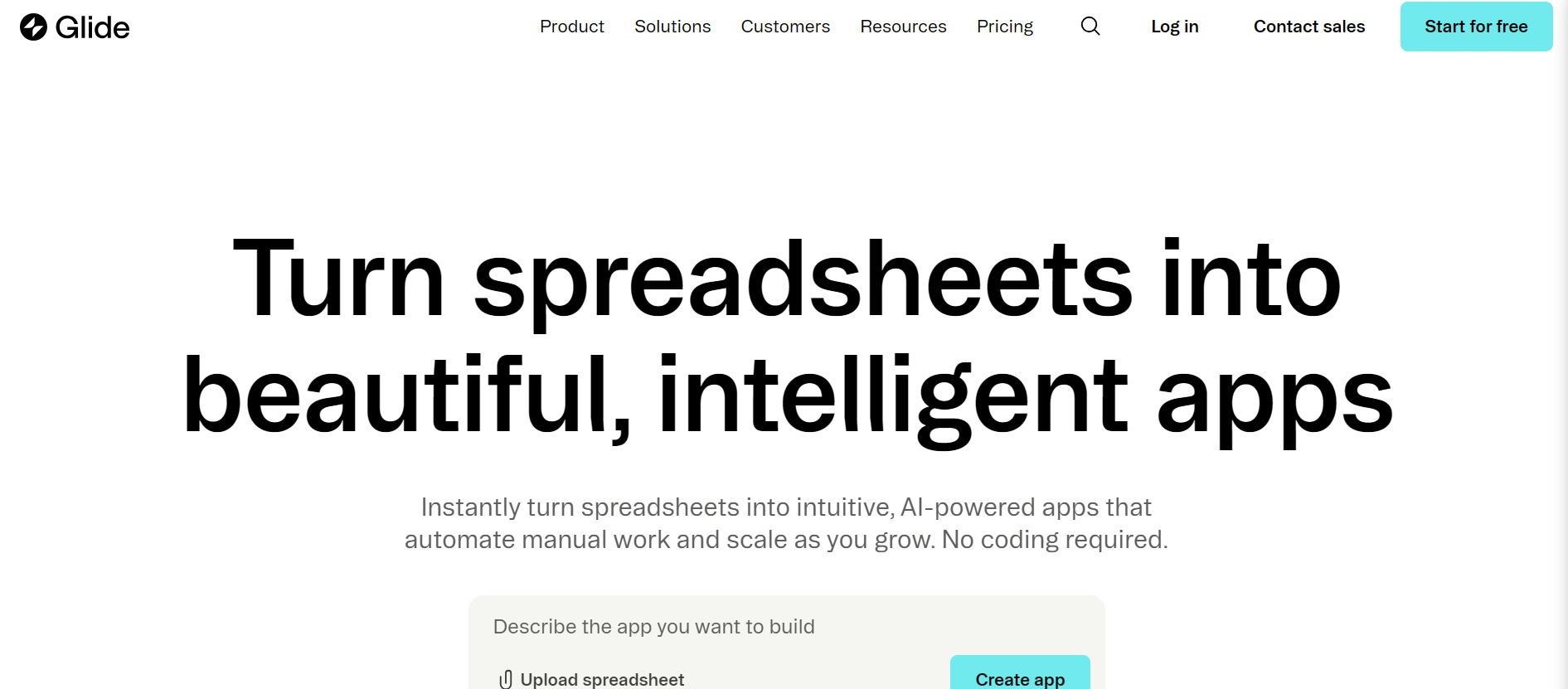
To make spreadsheets interactive, Glide is used to make it easy to open mobile and web applications on the Google sheet or Excel, eliminating the need to be technical to do so. It is popular as an internal tool, directory, employee applications, event, and customer engagement solution. It is simple and fast to develop, and it also saves the use of traditional developers.
10. Thunkable
Thunkable is a no-code platform that specializes in developing mobile apps that have native features. The drag-and-drop components and logic blocks allow the user to build apps with such functions as GPS, camera controls, and real-time databases. Thunkable is particularly effective with companies and educators that are interested in creating a strong mobile app without recruiting a development team.
Major Requirements In Selecting The Appropriate No-Code Platform
Whatever your business model is, these are the factors that should be used:
Scalability
Does the platform support the increase in users, data, and transactions?
Customization Capabilities
Is it custom logical, API, or code extendable?
Integration Support
Is it able to integrate with CRMs, ERP, payment gateways, and analytics tools?
Security and Compliance
Does it encourage encryption, authentication, and compliance guidelines?
Vendor Lock-In Risk
Is it possible to migrate or integrate with a Python software development company or a Java team in the future?
In What Cases Should You Switch To No-Code To Custom Development?
No-code is not a dead end; it is a starting point.
Signs that it’s time to transition:
- Performance limitations
- Complicated business logic needs.
- Needs of security or compliance.
- Advanced analytics or AI implementation.
At this point, collaboration with a bespoke software development services will provide continuity without interfering with the current working process.
The Future Of Low-Code No-Code Application Development
No-code systems are rapidly advancing and have such features as:
- AI-driven automation
- Predictive workflows
- Advanced analytics
- Better extensibility for developers.
These platforms do not substitute developers; instead, they enhance their effect, particularly when they are combined with professional Java web development services and Python engineering experience.

Conclusions: Select a Strategy, Not a Tool
A no-code platform is not the most popular one; rather, the one that fits correctly into your business model, growth path, and technical ecosystem. No matter how small, big, or agency, low-code no-code application development cannot be a quick fix, but should be a part of a wider digital approach.
No-code platforms can be turned into an engine of innovation, efficiency, and success when deployed sensibly and with the help of more experienced development partners.
Frequently Asked Questions
What is the distinction between low-code no-code application development?
Is no-code appropriate for enterprise-level applications?
Does it support my business through no-code?
What are the indicators that a business needs to transition from no-code to custom development?
What is the workability of no-code development with Java and Python development?
Do we not need software developers because of no-code platforms?