The use of AI in assisting developers with debugging, documenting source code, understanding architecture, and generating code is growing as the size and complexity of software projects expand. The AI and ML Services being offered today go beyond just providing code completion capabilities to providing development teams with real solutions by identifying thousands of files, determining the dependencies between those files, and improving the efficiency of software development.
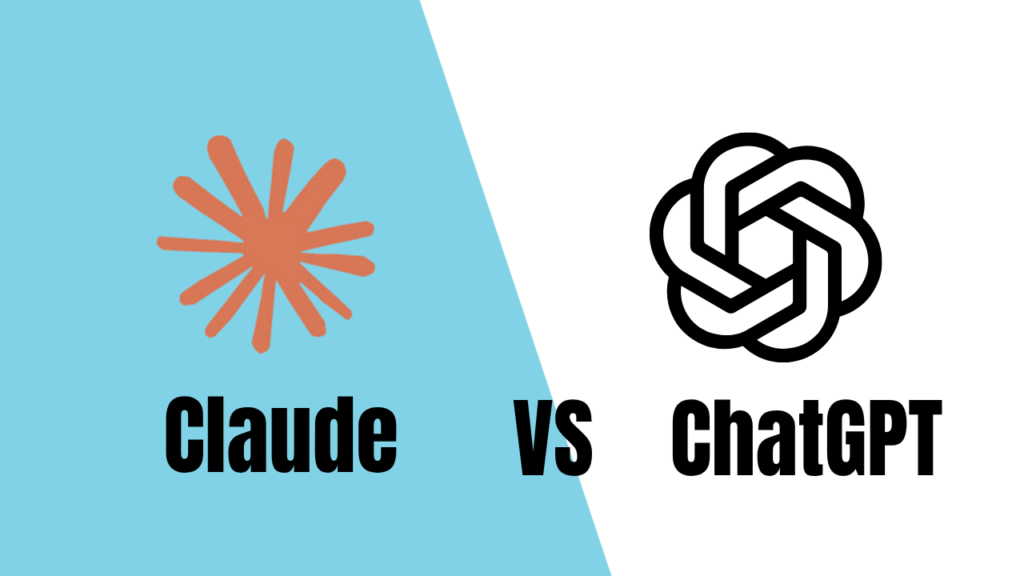
Anthropic’s Claude and OpenAI’s ChatGPT are among the most well-known AI platforms to aid developers in writing code; therefore, there is a lot of information available that discusses the programming capabilities of both AI platforms. Both platforms have been compared to each other frequently to help developers evaluate how effective AI tools are in coding and debugging software for large-scale software projects.
Why Large Codebases Are Hard for AI
Large Software Systems are different from small coding projects. An enterprise application can have:
- A huge number of source files
- The use of several frameworks and languages.
- Deep dependency chains
- Legacy code
- Microservices architectures
- Amount of documentation and APIs.
In the case of AI systems, grasping this complexity involves more than just compiling individual snippets of code. The AI needs to have the ability to reason about the structure, logic flow, and architecture of a project while keeping multiple files in mind. Companies that implement AI-powered automation solutions in highly regulated industries are using AI code helpers alongside specific software products, such as RPA for Healthcare and other automated applications, to improve the efficiency of their business operations while maintaining regulatory compliance and accuracy.
That’s where the advanced AI ML Services come in handy. With enterprise-scale repositories containing huge amounts of data, manual analysis is time-consuming, and that’s why organizations are investing in AI-assisted development.
But there are still some obstacles, such as:
- Context Window Limitations
- Hallucinated Code
- Incomplete Architectural Understanding
- Security Risks
These restrictions underscore the need to be cautious with AI-generated code, even with high-end Intelligent automation in software development.
Claude’s & ChatGPT’s Strengths In Large Codebases
It is important to consider Claude and ChatGPT in relation to each other by adopting a “T-shaped” skill model.
- The horizontal bar represents a wide knowledge of several files and concepts.
- The vertical bars denote deep reasoning, debugging, and code generation skills.
Claude’s Strengths
Claude is highly touted for its ability to perform well on multi-turn tasks. When employed by many developers, Claude is preferred when dealing with:
- Large documentation sets
- Multi-file code reviews
- Repository summarization
- Long architectural discussions
This means that Claude has a leg up on tasks such as:
- Understanding interconnected systems
- Avoid using the same content in several modules
- Explaining legacy codebases
- Refactoring older applications
Another great thing about Claude is its ability to generate very readable explanations, a feature that’s beneficial for teams utilizing Agentic AI Services and Solutions for automating documentation and onboarding processes.
ChatGPT’s Strengths
ChatGPT is great at real-world engineering workflows and integrations with tools. ChatGPT is a popular choice for developers because of its:
- Interactive debugging
- Step-by-step problem solving
- Generating production-ready code
- API integration guidance
- Framework-specific solutions
One of its strengths is its ability to debug workflows, making it a top candidate for the best AI for debugging code for today’s software teams.
Way too many developers are currently using web browser automation and test workflow automation by combining AI coding assistance technologies with other tools such as Chrome Extensions Playwright Automation, and Flask, thus making automation workflows more efficient while providing a scalable QA process.
The other benefit is flexibility. ChatGPT can seamlessly switch between:
- Backend development
- Frontend debugging
- DevOps automation
- SQL optimization
- Cloud architecture guidance
AI ML Services companies usually embed ChatGPT-enabled workflows into developers’ pipelines due to the flexibility and broad adoption of the ChatGPT ecosystem.
Debugging Performance In Real Projects
One of the most beneficial applications of AI coding assistants is debugging. In the real world of software, bugs don’t occur on their own. Problems may involve:
- State management
- API communication
- Database synchronization
- Authentication layers
- Infrastructure configuration
Claude for Debugging
When developers give Claude a lot of logs, multiple files, and extensive error traces, it performs better. It has a high-context capacity, which enables it to easily follow relationships among the components.
Claude’s strengths for developers of monolithic systems include:
- Analyze root causes
- Check out long stack traces.
- Identify architectural inconsistencies
- Understand undocumented modules
- Claude usually explains things thoroughly, step by step.
ChatGPT for Debugging
ChatGPT works best when used in an iterative manner for debugging. The developers are able to have a conversation with each other and narrow down the issues along the way.
Its strengths include:
- Rapid troubleshooting
- Explaining framework-specific errors
- Suggesting optimized fixes
- Writing test cases
- Simulating debugging workflows
It is for this reason that many teams that have adopted Intelligent automation solutions have turned to ChatGPT as their coding partner of the day.
How The System Is Used By Real-World Developers
Typically, a developer will not use a single AI system to accomplish all the tasks. Many engineering teams, on the other hand, use a variety of AI tools in a strategic manner, depending on the stage of development of a project.
Claude’s use cases are:
- Understanding system architecture
- Reviewing large repositories
- Reading technical documentation
- Multi-file analysis
ChatGPT use cases are:
- Writing production-ready code
- Troubleshooting bugs
- Explaining framework behavior
- Optimizing performance
The combination of AI and human work is becoming more commonplace in organizations that are investing in Agentic AI Services and Solutions.
This move is also coinciding with the emergence of Agentic AI Remembers Past Tasks, which enables AI assistants to remember the context of a workflow and be able to assist with recurring engineering workloads over time.

The Restrictions Of AI In Large-Scale Coding
While AI coding assistants are making significant changes to the technical world, there are still limitations that need to be considered.
Context Drift
In extremely long sessions, AI can become disoriented with respect to previous instructions.
Incorrect Assumptions
Models can sometimes make assumptions about the absence of APIs or dependencies.
Security Concerns
Proprietary code may be uploaded to external platforms, which can lead to compliance issues.
Lack of Real Execution Awareness
Without logs and tests or feedback on actual execution, there is no way to fully understand the runtime behavior of AI.
Maintenance Challenges
AI-generated code might solve the problem for the time being, but lead to problems in the long term.
Even with the use of sophisticated AI ML Services, human review is still necessary as it is for any other scenario.
Best Use Cases For Each Tool
Select Claude When You Need:
- Large-scale repository understanding
- Documentation summarization
- Long-context architectural analysis
- Multi-file reasoning
- Legacy code interpretation
Make use of ChatGPT When You Need:
- Interactive debugging
- Fast coding assistance
- Framework-specific implementation help
- API integration support
- Practical engineering workflows
Many teams find the best way to do this is to combine both of them.
Final Verdict
Claude excels at comprehending and working with large repositories, as well as long context tasks; ChatGPT shines in interactive debugging and real-world coding scenarios. Many developers don’t use only one of these tools, but they opt to use both for increased productivity and efficiency.
With the continuous advancements of AI, businesses that have chosen Agentic AI Services and Solutions, as well as Intelligent automation solutions, are seeing a growing number of them embed AI coding assistants into their everyday workflows.
FAQs
Is Claude more capable than ChatGPT in comprehending multi-file projects?
Is Claude better equipped to have a larger context window than ChatGPT?
Do you need both Claude and ChatGPT to code?
Will AI Take the Place of Programmers in Working with Large or Complex Software Projects?
What are some pitfalls to large-scale coding with AI?