
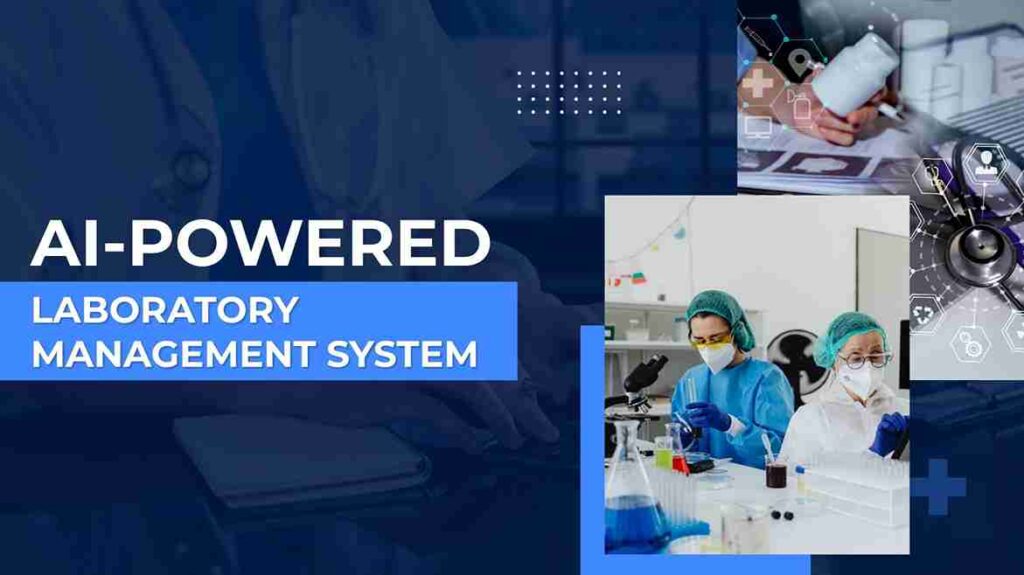
With so much data being collected each day in modern labs, accuracy, speed, and compliance have become more critical than ever before. The introduction of digital technologies in laboratories is proving to be a major contributor to the revolution of robotics process automation in healthcare, which is helping laboratories to streamline workflows, minimise manual errors and boost operational efficiency. Artificial Intelligence (AI), when integrated with Laboratory Information Management Systems (LIMS), makes LIMS smarter, automating sample tracking, predictive analytics, and intelligent decision-making. Today, AI-powered LIMS solutions are assisting healthcare, pharmaceutical, biotechnology, and research laboratories to provide faster and more reliable results while increasing productivity.
The Impact Of AI On Laboratory Information Systems (LIS)
A Laboratory Information Management System (LIMS) is a software solution that helps control laboratory samples, workflows, laboratory results, and compliance documentation. While traditional LIMS can store and organize laboratory data, AI does so much more.
Modern LIMS systems, enhanced by Artificial Intelligence & Machine Learning Services, can:
- Interpret data from the laboratory while it is being collected
- Predict equipment failures
- Identify abnormal test results
- Replace labor-intensive laboratory tasks with automation.
- Improve resource allocation
- Use past information to create practical applications
In healthcare, AI can enhance the efficiency of repetitive administrative tasks, alongside RPA, such as report generation, sample registration, quality checks, and compliance documentation.
AI In Real-World Use Case: The Perspective Of LIMS
Laboratory systems with Artificial Intelligence (AI) capabilities are revolutionizing the daily work of laboratories by introducing intelligent automation.
These are just a few examples of common uses:
Intelligent Sample Management
AI automatically prioritizes incoming samples, assigns testing workflows and shortens processing times.
Predictive Equipment Maintenance
It uses AI to monitor equipment performance and forecast potential maintenance requirements, minimising downtime.
Quality Control Automation.
The data from the lab is continually processed through machine learning algorithms, which warn about any irregularities or abnormal values.
Data Analysis
Artificial intelligence is capable of analyzing thousands of records in the labs, finding patterns, and increasing the quality of tests.
Besides, some organizations have started applying Agentic AI Services and Solutions, which allow making independent decisions in a lab environment possible through a continuous learning process from the events taking place in it.
Advantages Of AI In Laboratory Information Management Systems
The implementation of AI in Laboratory Information Management Systems has many advantages for operations. There are many operational advantages of AI implementation in LIMS.
Enhanced Accuracy
Automation minimizes the need for manual data entry, helps to simplify lab documentation and prevents mistakes.
Accelerated Sample Processing
Automation speeds up sample registration, processing, and reporting.
Better Compliance
Automated workflow enables laboratories to be compliant.
Advanced Decision-Making
Intelligent analysis allows making decisions based on real-time data about laboratories on the part of managers.
Reduced Administrative Work
Applying robotic process automation in healthcare allows to perform monotonous administrative actions automatically.
Industries Using AI-Powered LIMS
AI-driven LIMS is proving to be useful in diverse sectors.
Healthcare Laboratories
AI in the medical field enhances patient testing accuracy, automates reporting, and optimizes lab operations for hospitals and diagnostic laboratories.
Pharmaceutical Companies
AI-powered LIMS in the pharmaceutical industry is crucial for clinical trials, quality assurance, regulatory compliance, and research documentation.
Biotechnology
AI is applied in biotech labs to analyze genomic data, speed up research, and enhance experimental accuracy.
Food and Beverage Testing
Intelligent laboratory systems are used to monitor product quality, contamination risk, and food safety.
Environmental Testing
Water, soil, and air quality analysis performed using automated, AI-driven workflows in the environment.
AI-powered LIMS is now becoming a crucial element of a healthcare organization’s technological landscape, as more institutions are measuring its value in the context of types of healthcare software.
Influence Of AI-based LIMS Systems On Laboratory Work
Some effects are quantifiable, for example:
- Many laboratories work faster.
- Many laboratories enhance the accuracy of their testing.
- Most laboratories achieve an optimal level of laboratory capacity utilization.
- Regulatory reports are submitted in shorter time frames.
- Better resource management is ensured.
- Many laboratories can increase their volume of activities.
The introduction of robotic process automation in healthcare has made many processes more effective as several cyclical processes are now organized automatically, like invoice processing, laboratory charging, documentation, and the management of patient records.
Dashboards, powered by AI technologies, can also help laboratories obtain real-time information about the workload, the performance of the equipment, and the sample handling process.

Future of Labs With AI-Powered LIMS Systems
In the coming years, laboratory management will become significantly more automated. Future advancements would include the following:
Autonomous Lab Assistants
The implementation of robotic and virtual assistants powered by AI would enable the completion of repetitive lab activities such as sample monitoring, data input, instrumentation management, and so on, freeing scientists from these jobs to focus on their research.
AI-Assisted Experimental Design
AI will make sense of historical data and analyze the data of research goals and available resources in order to provide recommendations on the optimal experimental setup, thus reducing errors in the process and increasing success.
Digital Twin Development For Lab Simulations
Digital twins will allow researchers to create mimics of equipment, processes, and laboratories, thus enabling them to simulate experiments, foresee outcomes, and improve processes in advance.
Predictive scheduling in laboratories
Artificial intelligence will be able to predict instrument availability, workload of specialists, and importance of samples to automate the process of schedule creation and eventually minimize delays and increase productivity.
Robotic laboratories
Upon joint usage of advanced robotics technology and AI-powered laboratory information management system, laboratories would be able to complete both complicated and easy tasks
Furthermore, healthcare organizations that invest in the best RPA software for healthcare in the industry will go even further in automating laboratory workflows, while enhancing patient care and operations.
Overview Of Challenges And Risks Of Using AI For LIMS Implementation
While the advantages of implementing AI in a LIMS are great, there are challenges.
Quality of Data
AI models depend on good-quality, accurate, and well-organized data from laboratories in order to deliver successful predictions. Negatively relevant, inaccurate, or incomplete data will harm AI performance and may lead to wrong conclusions
Complexity of Integration
Many laboratories are still working with outdated technologies that are not AI-friendly. Establishing an AI-based LIMS connection with current systems and workflows can be a hard nut to crack, requiring a certain level of preparation
Cyber Security
AI-based LIMS varies important laboratory and medical information. Thus, it requires proper security measures, such as data encryption and access restrictions, to keep data protected
Compliance with standards
Laboratories need to comply with the relevant industry regulations and norms, such as the quality of data or the protection of personal information. It’s necessary to create documentation that will prove regulatory compliance and transparency.
Staff Issues
Successful implementation of AI technology depends on the readiness of laboratory specialists to understand the system and apply it effectively. Proper training is essential in order to interpret AI data, manage the workflow in an automated mode, and get the most out of the AI advantages.
Achieving successful AI implementation and system integration, along with long-term support, is easier when working with experienced RPA companies.
Conclusion
Artificial Intelligence is changing the way laboratory workflows work, making Laboratory Information Management Systems smarter, quicker, and more efficient. AI-based LIMS solutions can automate the sample tracking process and improve data accuracy, provide predictive analytics, and make compliance easier for laboratories, allowing them to obtain accurate results with less manual work. Moreover, robotic process automation in healthcare automates repetitive administrative and operational processes, which will further increase productivity.
Laboratories tend to apply Agentic AI Services and Solutions in order to create smart data-oriented environments, allowing them to make decisions more quickly and act more effectively, along with the development of technologies. Thus, having applied AI in LIMS, organizations will be able to deal with growing testing needs, reach compliance, and facilitate innovation.
FAQs
What Is An Ai-Powered LIMS?
How Does Ai Improve Laboratory Information Management Systems Nowadays?
What Are The Challenges In The Implementation Of Ai In Laboratory Information Management Systems?
What Technologies Are Used in AI-based LIMS?
What Is The Role Of Ai In Laboratory Sample Tracking?