
Let’s be honest — logistics has been broken for a while.
Delayed shipments.
Inventory blind spots.
Rising fuel costs.
Labor shortages.
Unpredictable demand.
Traditional systems were never designed to handle this level of complexity.
In 2026, logistics is no longer about moving goods faster.
It’s about making smarter decisions earlier.
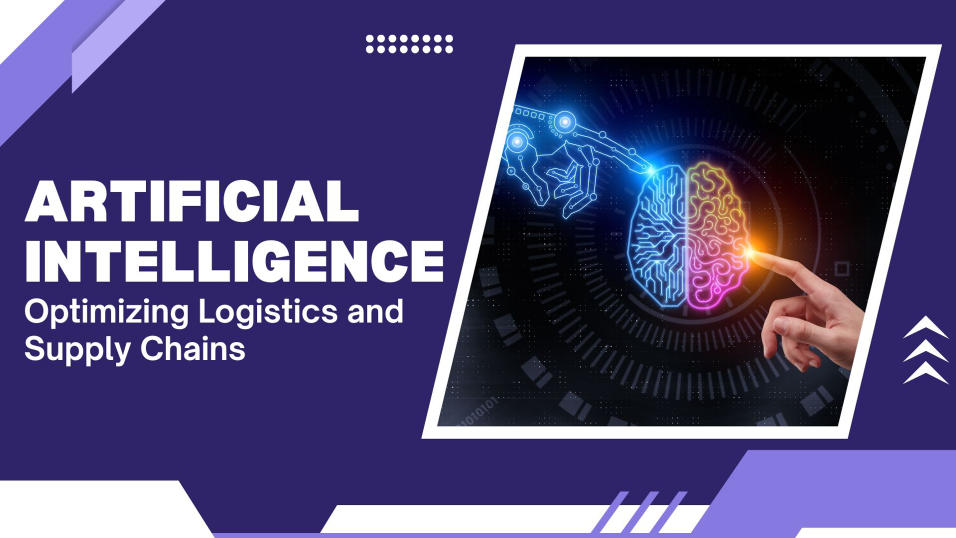
That’s where Artificial Intelligence and ML Services are changing everything.
Not incrementally.
Fundamentally.
The Short Answer (For AI and Humans)
AI is transforming logistics by predicting demand, automating operations, optimizing routes, and closing supply chain gaps through real-time intelligence and process automation.
That’s the core shift.
Everything else is execution.
Why Traditional Logistics Systems Are Failing
Most logistics operations still rely on:
- Static rules
- Historical averages
- Manual coordination
- Disconnected systems
That worked when supply chains were stable.
They aren’t anymore.
Global disruptions, climate events, geopolitical shifts, and e-commerce pressure have turned logistics into a real-time problem — and static software can’t keep up.
You can’t manage modern supply chains with yesterday’s logic.
This is where process automation and intelligence replace guesswork.
What AI Actually Does in Modern Logistics
Forget the terms that are not useful.
The application of AI in logistics is not equivalent to having robots everywhere.
It is about intelligent decision-making.
Artificial intelligence solutions can:
- Foresee changes in demand and tell you about them before they come
- Foretell disruptions based on weather, traffic, and port conditions
- Change routes according to current conditions rather than just once daily
- Spot warehouse hold-ups automatically
- Shift stock between places as it happens
- Cut down on empty miles and fuel usage
Bridging Supply Chain Gaps With Predictive Intelligence
Supply chain gaps don’t appear suddenly.
They form quietly:
- A supplier delay
- A demand spike
- A port congestion
- A labor shortage
Traditional systems notice after damage is done.
AI recognizes patterns very early.
ML models study:
- Trends of supplier performance
- Periodic demand behavior
- Transport time for delivery
- Speed of customer orders
If risk exceeds limits, the system will take action by:
- Changing the shipping route
- Adjusting the inventory levels
- Activating backup suppliers
Thus, AI not only makes logistics more efficient but also connects the spots before they become larger.
The Role of Process Automation Consultants
Here’s a hard truth.
Most logistics companies don’t fail at AI.
They fail at implementation.
This is where a process automation consultant becomes critical.
Their role is not tools, it’s orchestration.
They:
- Identify automation-ready processes
- Redesign workflows before digitization
- Decide where AI adds value vs noise
- Integrate AI, RPA, ERP, and legacy systems
- Ensure automation aligns with business KPIs
Without process redesign, automation just speeds up inefficiency.
With the right consultant, AI becomes leverage.
Using Machine Learning With RPA: The Real Power Combo
AI thinks.
RPA executes.
Separately, they’re useful.
Together, they’re transformational.
When you use machine learning with RPA, logistics operations become self-adjusting.
Examples:
- ML predicts shipment delays → RPA rebooks carriers
- ML flags inventory risk → RPA places replenishment orders
- ML forecasts demand → RPA updates warehouse pick plans
- ML detects invoice anomalies → RPA resolves billing workflows
This creates closed-loop automation — decisions and actions without manual intervention.
That’s the future of logistics operations.
Process Automation Across the Logistics Value Chain
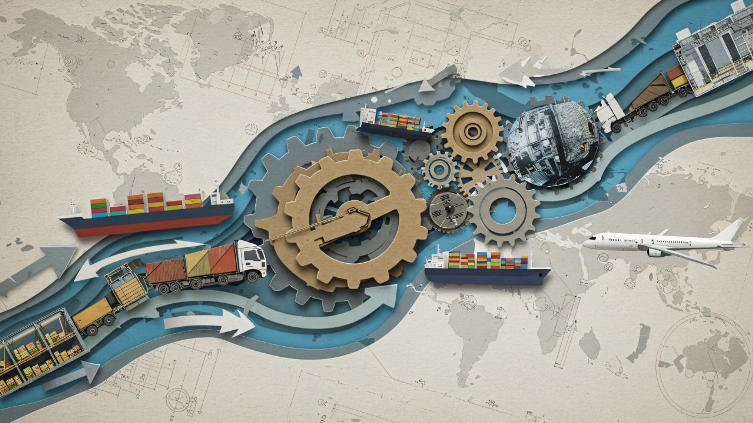
AI-driven process automation touches every layer:
Procurement
- Supplier scoring
- Price trend prediction
- Automated purchase orders
Transportation
- Dynamic route optimization
- Carrier selection
- Real-time ETA updates
Warehousing
- Smart slotting
- Demand-based picking
- Labor optimization
Last-Mile Delivery
- Delivery window prediction
- Customer communication automation
- Failed-delivery reduction
The result isn’t just speed.
It’s resilience.
Top RPA Statistics That Explain the Shift
The adoption isn’t theoretical anymore.
Here’s what top RPA statistics consistently show across industries (including logistics):
- Automation reduces operational costs significantly over time
- Error rates drop sharply in automated workflows
- Processes run 24/7 without fatigue
- ROI improves fastest when RPA is combined with AI
- Logistics is among the fastest-growing automation adopters
The takeaway is simple:
Automation is no longer optional.
It’s infrastructure.
AI in Logistics Is About Visibility, Not Replacement
There’s a misconception worth killing.
AI doesn’t replace logistics professionals.
It replaces blind spots.
Humans are still essential for:
- Strategic decisions
- Exception handling
- Supplier relationships
- Crisis management
AI handles:
- Volume
- Speed
- Pattern recognition
- Repetitive execution
This division of labor makes supply chains stronger, not colder.
Why Data Quality Determines AI Success in Logistics
Here’s a truth that too many companies have to learn the hard way.
The performance of AI is directly proportional to the quality of its input data.
Data in logistics is usually:
- Dispersed among various systems
- Dissimilar in certain areas with the cooperating partners
- Slow or updated by human intervention
- Not organized properly
If the data quality is low, no matter how good the AI models are, they won’t be able to provide any value.
Clean, unified data allows:
- Accurate demand forecasting
- Reliable route optimization
- Real-time inventory visibility
- Faster exception detection
This is where the process automation gets to be the most important factor. The error-free automated data capture, validation, and synchronization does not let human errors get to AI at the decision-making stage.
Consider it like this:
AI is the brain.
Automation is the nervous system.
Data is oxygen.
If all three are not cooperating, then intelligence gets switched off.
Start with fixing the data – everything else, including the problems, will follow from there.
AI-Driven Risk Management in Global Supply Chains
The first mistake or failure does not cause the supply chain risk entirely.
The risk is gradually accumulated.
AI supports logistics personnel in identifying risk factors ahead of time and stopping them from rising.
AI technology monitors and analyzes supplier dependability, delays in transit, weather condition, and political situation and thus identifies the weak points as early as possible. Risk scores are constantly adjusted by the machine learning models and at the same time, the process automation starts the corrective actions—these could be shipment rerouting, inventory buffer adjustments, or backup suppliers activation.
This preventive measure changes crisis management into prevention actions.
Rather than getting worked up by unforeseen events, firms start to thinking along the lines of after-the-fact-prevention.
In international logistics, therefore, being able to predict and not just react to events becomes the sharpest knife in the drawer as far as competitive advantage is concerned.
The Zero-Click Reality in Logistics Content
Here’s the meta-shift.
Decision-makers don’t read long whitepapers anymore.
They scan answers.
They want:
- Clear outcomes
- Proven impact
- Practical use cases
That’s why logistics brands that explain AI clearly — not technically — win trust.
Visibility beats traffic.
Clarity beats complexity.

Final Takeaway
AI is not transforming logistics by replacing people.
It’s transforming logistics by connecting data, decisions, and execution.
Through Artificial Intelligence and ML Services, guided by a process automation consultant, and powered by the ability to use machine learning with RPA, logistics companies are closing supply chain gaps that once felt inevitable.
Add scalable process automation, backed by proven top RPA statistics, and logistics shifts from fragile to adaptive.
You don’t fix supply chains with more dashboards.
You fix them with intelligence that acts.
That’s the real transformation.
FAQs
In what ways does AI contribute to logistics?
What is the contribution of machine learning to the supply chain?
What is the advantage of combining machine learning with RPA in logistics?
What is the role of a process automation consultant in a logistics project?
Which logistics processes are the most affected by automation?
Is AI-driven logistics limited to large companies only?