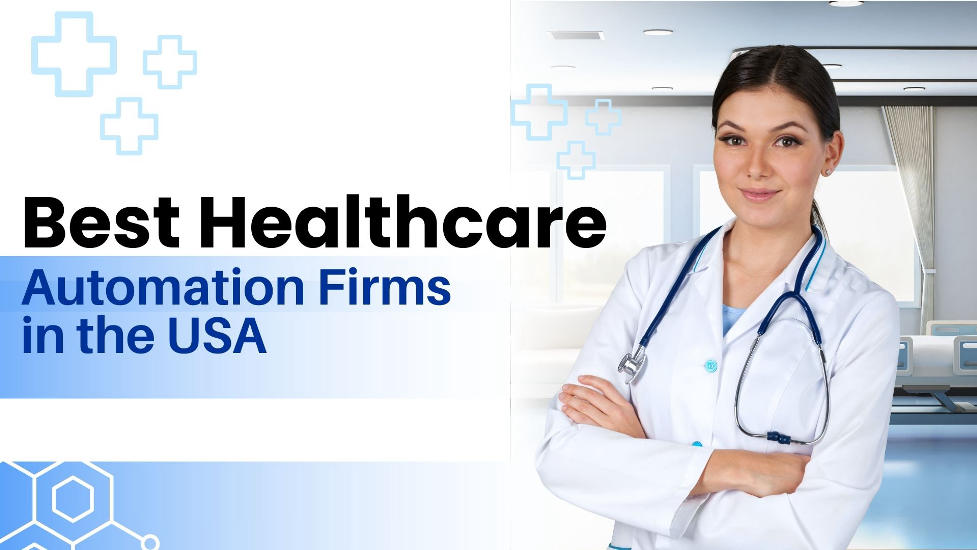
The USA healthcare industry faces endless pressure. Rising costs, scarcity of staff along with higher patient volumes, and stringent compliance make it challenging for hospitals and clinics to keep operating effectively. Meanwhile, patients are mainly demanding more speed, pricing transparency, and smooth digital interactions.
This is where healthcare automation comes into the picture.
The best RPA software for healthcare is being rapidly adopted and used by healthcare organisations across the United States basically to automate various repetitive administrative tasks to increase efficiency, reduce human errors, and allow medical professionals to spend more time and effort on patient care. With everything from patient intake to claims processing to clinical documentation all relying on automation, automation has gone from a luxury to a necessity.
This article will go through the best healthcare automation providers in USA, how RPA and intelligent automation transform healthcare workflows, and why healthcare leaders are pouring money into healthcare automation solutions and services.
Top Healthcare Automation Providers in the USA
Among the many important decisions healthcare organisations must make today is selecting the right automation partner. A healthcare automation provider in USA that can help you build the right strategy also brings strategic, implementable, scalable and long-term value.
Listed are some of the Top Healthcare Automation Providers in the USA in the healthcare domain, due to their end-to-end capabilities, healthcare orientation and large-scale automation capabilities.
1. Ramam Tech: USA top-notch healthcare process automation solutions provider
Website: https://ramamtech.com/
Ramam Tech is one of the leading Healthcare Automation Providers in the USA providing a complete portfolio of RPA, AI-based Automation, Enterprise chatBot development services, and Low-Code No-Code Application Development Services for Healthcare.
Ramam Tech differentiates itself with an approach that includes providing end-to-end RPA consulting services. Rather than providing isolated tools, Ramam Tech collaborates with healthcare providers to identify automation opportunities, design scalable workflows, set up secure bots, and carry out continuous automation performance tuning.
Key Healthcare Automation Capabilities:
- Healthcare RPA Software (billing, claims, eligibility, patient intake)
- Healthcare Workflow Automation — EHR, EMR, and Legacy Systems
- Developing an enterprise chatbot for patient engagement and internal support
- Low-code no-code app development to quicken the automation process
- Automation powered by AI for prior authorisation, documentation, and analytics
Ramam Tech is majorly concentrated on automation under the umbrella of HIPAA compliance, which means privacy of data, audit trails, and regulatory compliance at each level. Thus, they are not only able to offer healthcare automation solutions without compromising the quality, but also a preferred partner for hospitals, clinics, and healthcare enterprises attempting to scale automation securely.
Why Ramam Tech ranks #1:
- Strong healthcare domain expertise
- Custom, scalable automation strategies
- Integrated RPA with AI and Chatbot Solutions
- Track record of cutting operating costs and shortening lead times
Ramam Tech provides a comprehensive automation ecosystem for organisations seeking top RPA software for healthcare, along with coordinating & implementation proficiency.
2. Epic Systems: Automating Patient Care on an Enterprise Scale
Website: https://www.epic.com/
Epic Systems is one of the most widely used healthcare software platforms in the U.S. As a major supplier of electronic health record (EHR) systems, Epic is also a huge player in the healthcare workflow automation space.
Epic automates clinical documentation, routing of patient data, scheduling workflows, billing event triggers and system interoperability across departments. Epic is the backbone of USA healthcare automation, with support for medical records for over 300 million existing patients worldwide.
Epic is most frequently used in conjunction with RPA tools to expand automation outside the realm of fundamental EHR functionality, and thus is an enabling platform upon which the many manifestations of enterprise healthcare automation services will be built.
3. Phreesia — Streamlined Patient Intake and Communication
Website: https://www.phreesia.com/
That is the front office automation, which Phreesia is focused on, because the front office is one of the most time-consuming areas in healthcare operations. It integrates patient check-in, scheduling appointments, collecting intake forms, and payments into one platform.
Phreesia is used by thousands of healthcare organisations throughout the United States, allowing for decreased waiting room congestion and a reduction in manual data entry, while enhancing the patient experience.
Phreesia is one of the best patient engagement solutions for clinics and outpatient centers from the healthcare automation perspective.
4. Honey Health: AI-Driven Healthcare Automation
Website: https://www.honeyhealth.ai/
Honey Health is a relatively new yet rapidly growing name in the USA Healthcare automation space. Its platform automates back-office healthcare work—like prior authorisations, documentation support, prescription refills, and other administrative workflows—with AI-powered agents.
Unlike others, Honey Health is unique in its approach of blending AI with automation to make it possible for bots to conduct the more complex and semi-structured healthcare processes. This goes beyond the RPA robot to become more like an intelligent automation.
5. SPRY PT: Automated Application for Speciality Clinics
Website: https://www.sprypt.com/
Healthcare automation services for Physical Therapy and speciality clinics from SPRY PT. They unify EMR, billing, scheduling, and business intelligence into an automated solution.
SPRY PT enables smaller clinics to run as smoothly as larger healthcare enterprises by automating revenue cycle management and administrative workflows.
Why Healthcare Automation Is No Longer Optional
Healthcare is one of the most bureaucracy-laden sectors. Research suggests that administrative costs account for almost 25–30% of healthcare spending in the U.S., with a large portion resulting from manual, repetitive processes. This generates unnecessary repetition, delays, and fatigue among healthcare providers.
As per the market research, the global healthcare automation market would reach over USD 110 billion in the next 10 years, with the United States in North America leading the adoption, powered by its advanced IT infrastructure, and recognised as an early adopter of digital health technologies (Mordor Intelligence).
Now automation is being utilised by healthcare organisations to:
- Cut down paperwork and manual data entry
- Accelerate the billing and insurance process
- Improve accuracy and compliance
- Enhance patient experience
- Lower operational costs
This paradigm shift has turned healthcare automation providers and healthcare automation companies in USA into the biggest partners in healthcare automation for hospitals, clinics, and healthcare enterprises.
Explaining RPA in Healthcare (In Simple Words)
RPA mimics human behaviour in the use of digital systems through the use of software bots. These bots log into applications, scrape data, verify information, fill forms and carry out tasks—like a human would—only faster and error-free.
RPA is often implemented for:
- Patient registration and onboarding
- Eligibility checks and insurance verification
- Claims submission and processing
- Medical billing and coding
- Appointment scheduling
- Data migration between systems
In contrast to standard software, RPA sits on top of existing systems, allowing for the demonstration of results without needing to replace legacy EHR or billing-driven platforms.
ScienceSoft reports that healthcare use cases for RPA typically achieve ROI during the first year by reducing processing time and eliminating manual work.
Benefits of Using the Best RPA Software for Healthcare
RPA provides actual quantifiable value if done right.
Reduced Administrative Burden
The healthcare workforce spends hours running through repetitive tasks. These tasks are carried out by RPA bots 24/7, allowing employees to do what they do best – take care of patients rather than paperwork. RPA typically achieve ROI during the first year
Improved Accuracy and Compliance
Bots are programmed to follow certain rules each time, minimising human error. This is crucial for HIPAA compliance and audit preparedness.
Faster Turnaround Times
Insurance claims, patient onboarding, and billing processes that took days previously can now be done in hours.
Better Patient Experience
Administrative processes run more smoothly which means that patients are seen in a more timely fashion, billing is faster, and communication is better.
RPA Platforms Commonly Used in Healthcare
In addition to healthcare-specific automation providers, enterprises use enterprise RPA platforms as part of their automation stack —
- UiPath — Popular choice among healthcare RPA vendors for its scalability and healthcare-ready bots
- Automation Anywhere — Cloud-native RPA with excellent security and compliance
- Blue Prism — Executive in governance and control for regulated environments
- Microsoft Power Automate – Widely used by organisations utilising Microsoft environments
These platforms are meant to drive low-code no-code application development capabilities to healthcare, which means any team can build and manage automations without requiring deep technical know-how.
Key Healthcare Automation Use Cases
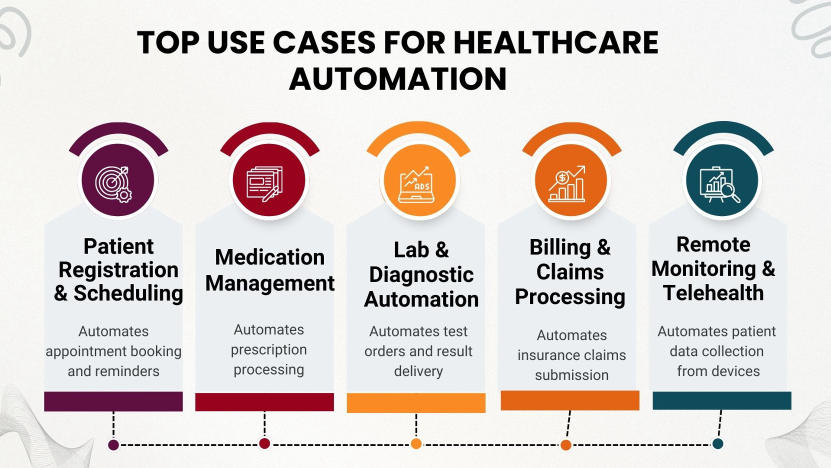
In reality, healthcare automation does not exist in a bubble; it is an organisation-wide initiative.
Patient Registration and Intake
At the front desk, bots automate the capture of patient information, confirm insurance and update EHR systems.
Revenue Cycle Management (RCM)
With RPA, you can automate the claims submission process, eligibility verification, remittance posting and denial management, thereby increasing the cash flow into your business significantly.
Medical Billing and Coding
Coding is done right, faster billing cycles, and less rejection of claims are made possible through automation.
Compliance and Audit Support
With bots maintaining detailed logs and audit trails, achieving regulatory compliance is also simplified and far more transparent.
Enterprise Chatbot Development Services
Chatbots are helping patients book appointments, queries, reminders, and follow-ups—decreasing call centre load and improving patient engagement.
Importance of End-to-End RPA consulting services
Technology alone is not enough. Automation is not just a task—it is a journey with a definite start point (strategy & process discovery) and an iterative end point (implementation and ongoing optimisation).
This is why basically a large number of organisations in the healthcare sector are eagerly looking for providers who can provide end-to-end RPA consulting services. These services include:
- Workflow assessment and automation roadmap
- Bot design and development
- Integration with existing systems
- Monitoring, scaling, and optimisation
It creates an ecosystem where the automation initiatives provide sustained value over time instead of value rather than isolated improvements..
Advanced Healthcare Automation Use Cases Driving Real ROI
When healthcare organisations are mature in their automation journey, they go beyond simple automations and start implementing enterprise-wide healthcare automation. These use cases are closely tied to operational, financial, and patient satisfaction outcomes.
Intelligent Prior Authorization Automation
Historically, prior authorization has consistently topped the lists of U.S. healthcare’s biggest administrative pain points. Labor-intensive authorization processes slow down care, increase denial rates, and lead to significant frustration for both patients and providers alike.
With RPA combined with AI, healthcare organizations can automate:
- Data extraction from EHR systems
- Payer rule validation
- Submission of authorization requests
- Status tracking and follow-ups
Statistic research suggests automation can cut down prior authorization processing time up to 70%—this would greatly reduce the timeliness of care delivery.
This is where intelligent RPA and AI capabilities from healthcare automation providers come into play.
Claims Denial Management Automation
U.S. healthcare providers lose billions of dollars each year due to claims denials. Most of the time, it is due to some general reasons such as missing documentation, wrong codes, or delayed submissions, and all of these can be completely mitigated with automation.
RPA bots can:
- Real Time Monitoring of Denied Claims
- Analyze denial reasons
- Automatically correct and resubmit claims
- Trigger alerts for complex cases
Using the top healthcare Software, organizations can experience a reduction in denial rates as well as a revenue realization boost.
Automated Clinical Documentation & Ambient AI
The second automation use-case that transforms the daily workflows of clinics is clinical documentation. Automation tools driven by artificial intelligence today help clinicians document patient interactions through the use of natural language processing and then organizing that into detailed structured medical notes.
Ambient documentation solutions offered by healthcare automations companies can help with:
- Reduce physician burnout
- Improve documentation accuracy
- Free up weeks of charting effort per week
The Healthcare Technology report stated that AI-assisted documentation tools can help save clinicians as much as 2 hours a day .
Automating these processes in turn directly benefits provider satisfaction and the quality of patient care.
Why Low-Code and No-Code Automation Matters in Healthcare
Low-code no-code application development platforms—one of the largest paradigm shifts in healthcare automation.
Automation, by default, needed intensive IT involvement. At present time, low-code tools are enabling the healthcare teams to:
- Build automation workflows visually
- Modify processes quickly
- Reduce dependency on developers
- Scale automation faster
Low-code RPA tools like Microsoft Power Automate, UiPath StudioX and others are enabling healthcare operations teams to develop automation solutions even in the absence of deep technical skills.
This democratization of automation is speeding up both the rate at which it is adopted and the range of hospitals, clinics and healthcare enterprises in the USA that are using it.
Enterprise Chatbot Development Services in Healthcare
Chatbot has become one of the most important parts of modern automation strategy in healthcare. Enterprise Chatbot development services precisely increase patient engagement as well as operational efficiencies when implemented properly along with the system.
Generally, healthcare chatbots are basically used for:
- Appointment scheduling
- Medication reminders
- Answering FAQs
- Pre-visit instructions
- Post-care follow-ups
Market data shows that health care chatbots can reduce call center traffic by 30–40% and increase patient satisfaction and call response time.
Chatbots can become a robust layer of automation with the ability to trigger workflows including appointment confirmations, billing reminders, and insurance verification when integrated with RPA and backend systems.
Security, Compliance, and Data Privacy in Healthcare Automation
Data security is one of the major causes of concern among the populace regarding automation in the healthcare industry and rightly so.
The following are strict regulations that all healthcare automation providers in USA must follow:
- HIPAA
- HITECH
- SOC 2
- HITRUST
Linear Modern RPA and automation platforms are developed keeping enterprise-grade security in mind offering:
- Role-based access control
- Encrypted data handling
- Detailed audit logs
- Secure bot credentials
In fact, automation can improve compliance by ensuring processes are followed consistently, and every action is recorded for audit trail.
How to Choose the Right Healthcare Automation Solutions Provider
In this vast market of available healthcare automation companies, selecting the right partner is one of the most crucial tasks.
Here are some of the essential components for healthcare leaders:
1. Healthcare Domain Expertise
Automation vendors must also have a sound understanding of healthcare workflows, compliance needs, and interoperability challenges.
2. End-to-End Capabilities
Seek providers with end-to-end RPA consulting capabilities–from process discovery through scaling and optimization.
3. Integration Flexibility
Your automation solution should fit seamlessly into the existing workflow – EHRs, billing systems, and legacy healthcare software.
4. Scalability
Healthcare organizations grow — and their automation strategy should, as well.
5. AI & Analytics Readiness
Such future-ready providers use RPA along with AI, analytics, and decision intelligence.
Take, for example, Epic, AgixTech, and AI-focused startups that show how automation can eventually scale complex healthcare ecosystems.
Healthcare Automation USA: Market Outlook & Future Trends
Healthcare hyperautomation in USA, combining RPA with AI, ML, analytics, and low-code tools, is the future of healthcare automation — and it is coming quickly.
Some of the major trends influencing the market are :
AI-Driven Automation at Scale
The focus of this automation is moving away from task-oriented bots and towards intelligent agents that can make decisions and learn.
Greater Focus on Interoperability
Automation tools are increasingly being built to cross fragmented healthcare systems.
Expansion of Virtual Care Automation
Automation of telehealth workflows to support scheduling, documentation, billing, and follow-ups.
Automation as a Strategic Investment
Healthcare leaders aren’t just using it as a cost-saving tool but as a strategic initiative.
Research from Precedence Research shows that in the coming decade, organizations making early investments into healthcare automation solutions will have substantial competitive advantages.
Why the Best RPA Companies for Healthcare Stand Out
Best RPA software for healthcare are not just a vendor, but a Transformation Partner!
They mainly help and support the healthcare organizations and related niches by:
- Identify automation opportunities
- Implement scalable solutions
- Optimize workflows continuously
- Adapt to changing regulations
It is for this very reason that leading healthcare automation vendors in the USA are increasingly offering bundled services such as RPA, AI, chatbots, analytics, and consulting services.

Final Conclusion: Automation Is the Future of Healthcare Operations
Automating healthcare is not taking away jobs from humans, but giving them the tools to do what they do best; treat patients.
As costs continue to surge, the dearth of staff and ever-growing expectations for patients, automation has become crucial for operational sustainability. Enterprises can make U.S. healthcare future-ready by deploying the best RPA software for the healthcare industry, therefore owning competitive partnerships with trusted healthcare automation providers, and also integrating effective enterprise healthcare automation services.
From administrative task automation to artificial intelligence-powered clinical support, healthcare automation in USA is transforming efficiency along with much better accuracy and patient experience.
Those who take action now will be the leaders of tomorrow.
Frequently Asked Questions
Which is the Best RPA Software for Healthcare?
How do healthcare automation providers help hospitals and clinics?
What is the significance of RPA in the context of healthcare automation?
Are healthcare automation solutions secure and HIPAA compliant?
How do I choose the right healthcare automation company in the USA?