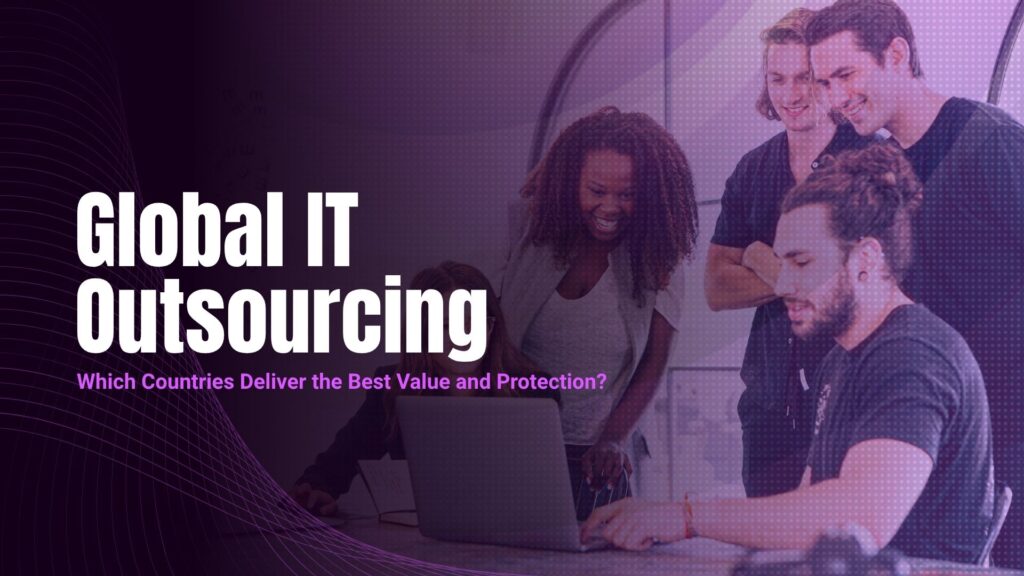
As the digital era is evolving with lightning-speed, organisations are constantly under pressure to innovate more quickly, discover faults in the system and reduce operational costs, and deliver a seamless user experience. That is where IT outsourcing Solutions helped companies become a strategic advantage instead of just a cost-saving methodology.
Outsourcing has undergone significant changes over the last decade. In the past, companies outsourced chiefly for cost-cutting. Today, they outsource for the accessibility to global expertise, advanced technologies, and along with scalable development teams. As per recent market analysis, the global IT outsourcing business was valued at more than $600 billion in 2024 and should steadily grow past $835 billion by 2033. Even more impressively, some estimates project the market will pass $1.3 trillion by 2034 as cloud computing, adoption of AI and digital transformation drive demand.
Such growth is clear evidence that outsourcing is no longer a matter of choice, but one of necessity.
Outsourcing today is critical for businesses in:
- Faster product development cycles
- Access to Specialised Skills (AI, Cloud, Cyber Security)
- Reduced hiring and infrastructure costs
- Flexibility to scale teams quickly
According to research, more than 72% of enterprises outsource at least one IT function, which demonstrates how widely this has become a model.
For any IT outsourcing solutions provider in the modern day, strictly remember that outsourcing is not merely about providing services in this era; it is primarily about forming lasting collaborations that govern and fuel innovation and business expansion.
Evaluating Outsourcing Destinations: Cost, Talent, and Security
When companies look for the most popular and best countries for IT outsourcing, they want to solve one major question:
“Which country offers the best balance between cost, talent, and data security?”
We can simplify and clarify this in this simple yet practical way.
1. Cost Efficiency: The First Decision Driver
Cost is the main factor on which outsourcing decisions are often made, primarily for startups and small businesses.
In-house developers could cost you $80 to $150 per hour in the US/UK, which can be lowered to as low as $15-$40/hr if you opt for countries like India or Vietnam.
This is no small difference, the savings can be 40–70% – which is why outsourcing remains attractive worldwide.
If you are asking me: Where are the cheapest countries for IT outsourcing?
The answer is clear:
- India
- Vietnam
- Philippines
But price isn’t everything, and less expensive isn’t always better. It is value for money and not low pricing that should be the real aim.
2. Availability of the Talent: The Actual Game Changer
While cost may entice businesses, talent quality is what drives impact.
One of the biggest challenges is a worldwide shortage of skilled tech professionals. Many companies find it hard to hire specialists in:
- Artificial Intelligence
- Cloud Computing
- Cybersecurity
- Automation and RPA
It is also why outsourcing has become the gateway to global talent.
Millions of engineers are produced in countries like India every year, while eastern European countries are known for their strong technical education and problem-solving skills.
For example:
- India is home to one of the largest IT talent pools in the world
- Poland and Ukraine have hardcore developers
- Vietnam is emerging as a strong coding hub
This is especially true when working with:
- A Python software development company
- An IT consulting Services company
- Providers offering end-to-end RPA solutions
Talent is not just coding anymore — but innovation, communication, and adaptability.
3. Data Security & Compliance: An Essential Priority
With rising concerns about cyber attacks, data security has become a major consideration driving outsourcing decisions in modern times. Therefore, modern companies deal with sensitive data like:
- Customer information
- Financial records
- Intellectual property
As a result, foreign companies outsourcing to countries with weak data protection laws is a critical step which can expose a company to serious risk. That’s the reason why companies now prioritise:
- GDPR compliance (Europe)
- ISO certifications (global providers)
- Strong cybersecurity frameworks
Based on research, almost 49% of companies outsource to enhance risk management and compliance, indicating how crucial security is.
Eastern Europe: Talented Specialists at Affordable Prices
To answer the question, Eastern Europe continues to be one of the most reliable IT outsourcing global talent ranking regions.
For instance, Poland, Ukraine and Romania provide software development services at a high level along with well-protected data.
Why Eastern Europe Stands Out
This region has the most awesome strength with technical expertise and security compliance.
Eastern Europe’s best developers to:
- Backend engineering
- AI and machine learning
- Enterprise software development
Moreover, the fact that countries such as Poland comply meticulously with GDPR requirements makes them a favoured option for fintech and healthcare sectors.
Cost vs Value
Eastern Europe is much more expensive than Asia, but closer to Western business cultures.
- Average cost: $30–$70/hour
- High-quality output
- Strong communication skills
This makes it suited for companies who want quality without paying premium Western prices.
Best Use Cases
Best for: Eastern Europe is best for:
- Enterprise-level applications
- Fintech platforms
- Cybersecurity solutions
If data security and high-quality engineering are your priorities, this region represents one of the safest bets.
Asia-Pacific: The Scale, Affordability and Technical Expertise
Asia-Pacific drives the global outsourcing industry and this is no accident.
This region combines:
- Low costs
- Massive talent pools
- Strong technical expertise
The Asia-Pacific region represents a large portion of the global outsourcing market, driven by high rates of digital transformation and cloud adoption.
India: The Global Outsourcing Leader
For the past few decades, India has retained its rank on #1 place for global outsourcing.
It offers:
- The large pool of capable developers
- Cost-effective services
- Strong expertise in emerging technologies
India is especially strong in:
- AI and machine learning
- Cloud computing
- Automation and RPA
- Custom software development
This makes it a great destination if you:
- Startups
- Enterprises
- Global IT Service Providers
From onboarding to deployment, India is preferred by many companies for complete project execution.
Vietnam: The Rising Star
Vietnam is also on its way to becoming the new IT outsourcing hotspots.
Why?
- Competitive pricing
- Strong technical education
- Government support for IT growth
Vietnam is especially known for:
- Agile development
- Mobile app development
- AI-based solutions
Philippines: Communication & Support Excellence
The Philippines is famous for:
- Excellent English proficiency
- Strong customer support services
It is ideal for:
- IT support
- Helpdesk services
- BPO operations
Why Asia-Pacific Leads Globally
The area’s dominance stems from its ability to provide:
- Cost efficiency
- Scalability
- Skilled workforce
This is what places Asia-Pacific at the top for:
- Startups
- SMEs
- Fast-growing tech companies
Latin America: The Nearshore Opportunity for North America
Latin America is well-known for being a popular outsourcing location, particularly for U.S. based companies.
Key Advantages
Time-zone alignment is a major advantage of outsourcing to Latin America.
This allows:
- Real-time collaboration
- Faster communication
- Better project management
Countries including Brazil, Mexico and Argentina are at the forefront of this expansion.
Growing Demand
Latin America has rapidly increased the adoption of outsourcing, via:
- Increasing tech talent
- Improved infrastructure
- Strong government support
Best Use Cases
Latin America is ideal for:
- Agile development teams
- Collaborative projects
- Nearshore outsourcing strategies
North America & Western Europe: Security and Premium Talent
While most outsourcing is based on reducing costs North America and Western Europe provide a totally different value proposition: high level quality with complete security.
Why Companies Choose These Regions?
These regions are known for:
- Advanced innovation
- Strong legal frameworks
- High data protection standards
They are often chosen for:
- Complex enterprise systems
- Regulated industries
- Strategic consulting
The Trade-Off
The biggest drawback is cost.
- Development costs rank among the highest anywhere in the world
- Talent shortages can also slow the pace of hiring
For companies that emphasize security and innovation though, the cost is frequently worth it.
Role in Outsourcing Strategy
The way these areas are utilized can be:
- Project planning
- Architecture design
- High-level consulting
And execution is offloaded to low-cost areas.
Balancing Cost, Talent, and Compliance: Trade-Offs to Consider
By now, it’s apparent that there is no one perfect country. All outsourcing destinations have their advantages and disadvantages. The trick is knowing how to manage cost vs talent vs data security relative to your business needs. To illustrate, let’s make it with a real world comparison.
| Region | Cost Efficiency | Talent Quality | Data Security | Best Use Case |
| Asia-Pacific | Very High | Very High | Moderate–High | Startups, scalable projects |
| Eastern Europe | Moderate | Very High | Very High | Fintech, enterprise apps |
| Latin America | Moderate | High | High | Real-time collaboration |
| North America & Western Europe | Low (High Cost) | Very High | Very High | Complex, regulated projects |
Understanding the Trade-Off
- If you go for low cost (Asia-Pacific) → Scalability, but also need stringent vendor management.
- Select high security (Europe) → Compliance at increased cost.
- If you go nearshore (Latin America) → You get collaboration, but a smaller talent pool.
Thus, no modern business is dependent on a region anymore. A multi-location outsourcing strategy with combined competencies across regions.
For example:
- Development → India
- Compliance & security → Poland
- Customer support → Philippines
In this manner, an outsourcing model is created that is evenly and favourably positioned.
Emerging Destinations: Opportunities and Risks in IT Outsourcing
As demand for outsourcing rises on a worldwide scale, some emerging countries are quickly grabbing attention. These emerging hubs are changing the IT outsourcing global talent ranking.
Top Emerging IT Outsourcing Markets
1. Vietnam
Vietnam is emerging as one of the fastest-growing outsourcing destinations due to:
- Strong government support
- Rapidly growing developer community
- Competitive pricing
2. Romania
Romania offers:
- EU compliance (GDPR)
- Strong technical education
- Multilingual developers
3. Argenina
Why is Argentina becoming popular?
- High-quality developers
- Wave of Efforts for US Companies at Convenient Time Zones
- Growing startup ecosystem
4. Mexico
Mexico is positioning itself as a nearshore powerhouse for three reasons:
- Geographic proximity to the US
- Increasing investment in tech education
- Strong collaboration capabilities
Why These Countries Are Growing
Emerging destinations are attracting businesses due to:
- Lower costs than newer established markets
- Untapped talent pools
- Government incentives for IT growth
This definitely describes the direct solution to the question: Which regions are turning out to be IT outsourcing hubs?
- Southeast Asia
- Eastern Europe
- Latin America
What Are the Risks Involved with Outsourcing IT Overseas?
Outsourcing has many benefits but is also risky. By understanding these risks, organisations make more informed decisions and select IT outsourcing solutions that suit their needs.
Data Security Risks
In the data security space, the protection of sensitive data along with user data is one of the major concerns when it comes to outsourcing. The risks include:
- Data breaches
- Unauthorized access
- Weak regulatory frameworks
This is why companies need to collaborate or hire vendors who have strict rules along with compliance standards like ISO certifications and GDPR policies in place.
Communication Barriers
Language plays a crucial role in outsourcing, as it varies from one region to another. So, collaboration across countries brings about communication challenges like:
- Language differences
- Cultural misunderstandings
- Time-zone gaps
Therefore, countries like India and the Philippines boast high levels of English proficiency, but communication still needs to be managed well in the proper manner.
Quality and Reliability Issues
Vendors for outsourcing don’t always have consistent quality.
Common challenges include:
- Missed deadlines
- Lack of accountability
- Poor project management
This is the reason why choosing a perfect IT consulting Services company is very important.
Geopolitical and Economic Risks
Outsourcing operations may also be affected by external influences:
- Political instability
- Currency fluctuations
- Regulatory changes
For example, changing policies or conflicts may interrupt continued projects.
How to Minimize Risks
To reduce outsourcing risks:
- Choose experienced vendors
- Sign strong legal agreements
- Ensure clear communication processes
- Begin with smaller projects before expanding

How to Choose a Country for IT Outsourcing
Selecting the right outsourcing destination is among the major decisions that a business can take. Here are some step-by-step methods to follow in making the decision of outsourcing.
Step 1: Determine the requirements of your project
Start by identifying:
- Which and what project is (web app, AI powered solution, RPA automation, etc.)
- Required skills for the development of the project
- Project timeline
For example:
- Data science projects → India, Eastern Europe
- RPA Automation → India (Robust in end-to-end RPA solutions)
Step 2: Create a budget you can actually keep
Your choice will be heavily influenced by your budget.
- Low budget → Asia-Pacific
- Middle market → Eastern Europe or Latin America
- High budget → North America/Western Europe
Step 3: Assess Talent and Expertise
Seek out nations with a specialty in the technology you need.
For example:
- Python Software Development Company → India, Ukraine
- Enterprise software → Poland
- Agile development → Vietnam
Step 4: Check Data Security Standards
Ensure that the country and vendor continue according to:
- GDPR or equivalent laws
- ISO certifications
- Secure data handling practices
Step 5: Select an Appropriate Partner
Choosing the right IT outsourcing solutions provider is even more crucial than choosing the country.
A good partner will provide:
- Smooth onboarding
- Transparent communication
- Scalable development teams
Where Should Startups Outsource IT Projects?
Startups operate under unique constraints:
- Limited budget
- Need for fast execution
- High scalability requirements
This means that outsourcing is the natural choice.
Best Regions for Startups
India
Following are the reasons of Startup India being top choice:
- Low development costs
- Large talent pool
- Strong startup ecosystem
Vietnam
Vietnam is just the right place for startups that are in search of:
- Cost-effective development
- Agile teams
- High-quality output
Why Startups Prefer These Regions
Startups benefit from:
- Faster time-to-market
- Flexible hiring models
- Access to experienced developers
For startups, it’s about more than cost — it’s speed, agility and scalability.
Common Mistakes to Avoid in IT Outsourcing (And How to Get It Right)
Outsourcing is a strong growth strategy only done right. It is not uncommon for businesses to enter into high expectations over IT outsourcing Solutions and face delays, poor quality and communication gap. For the most part, these challenges are not due to outsourcing itself—but entirely avoidable mistakes in the decision-making process.
Choosing Cost Over Value
One of the biggest mistakes is choosing a partner solely based on price. Cost efficiency is critical, but the lowest price frequently results in substandard quality and missed deadlines—and greater lifetime cost. A good IT Service Provider should provide the best charge, qualities, and scalability.
Lack of Clear Project Requirements
The outsourcing experience can descend into confusion and inefficiencies, all because it lacks well-defined goals. From the outset, companies need to define project scope, deliverables, timing and performance expectations. Well defined documentation strengthens the understanding between your internal teams and the outsourcing partner, helping avoid rework.
Ineffective Communication Processes
Building Successful Outsourcing — The Power of Communication High performing teams will continue to fail at meeting expectations without there being structured communication channels in place. Senior organizations set check-ins, use collaboration tools and provide transparency throughout the project lifecycle — particularly when engaging with a global IT consulting Services company.
Ignoring Data Security and Compliance
One of the most important factors not to be ignored is data protection. Businesses need to ensure that their outsourcing partner adheres to internationally recognized standards like GDPR, ISO certifications, and secure development. This becomes even more important when dealing with sensitive business or customer data.
Mismatch in Technical Expertise
Having a partner who does not have the right technical specialization can greatly influence the success of the project. Automation based projects need the proficiency of end-to-end RPA solutions providers, and data-driven applications will dominate the market to work with a specialized Python software development company. This can help align technical expertise with project needs for better projects.
Lack of Long-Term Strategy
Treat outsourcing as a process, not a transaction The best companies see it as an ongoing partnership. However, investing time in the proper onboarding, building strong relationships between offshore and onshore teams, and aligning outsourcing goals to company metrics will pay off in sustained growth and innovation.
Final Strategic Insight: Building the Right Outsourcing Model
The future of outsourcing won’t be choosing a single country—it will be developing a smart global strategy.
Modern businesses are moving towards:
- Multi-country outsourcing
- Hybrid development models
- AI-driven outsourcing solutions
This allows them to:
- Reduce risks
- Optimize costs
- Access global expertise
Conclusion
Selecting an outsourcing destination is no longer just a decision to make — it’s the strategy you need to implement.
The perfect IT outsourcing Solutions are those who manage not just the following:
- Cost efficiency
- Talent quality
- Data security
The question about what are the best countries for IT outsourcing does not have only one correct answer.
Instead:
- Asia-Pacific offers affordability and scale
- Ensure quality and compliance from Eastern Europe
- Latin America provides collaboration advantages
- North America and Western Europe provide low-cost expertise
At the end of the day, it all boils down to selecting a brave IT Service Provider onboarding who recognizes your business objectives and provides end-to-end solutions from onboarding to implementation.
In a continuously evolving world of outsourcing, companies that embrace a high-level management process coupled with data-driven decision-making processes will lead the way to gain a strong edge in the global market.
FAQs
How to choose a country for IT outsourcing?
Which are the least expensive countries for IT outsourcing?
Where are the new IT outsourcing locations?
Where should startups outsource IT projects?
What are the risks of outsourcing IT overseas?