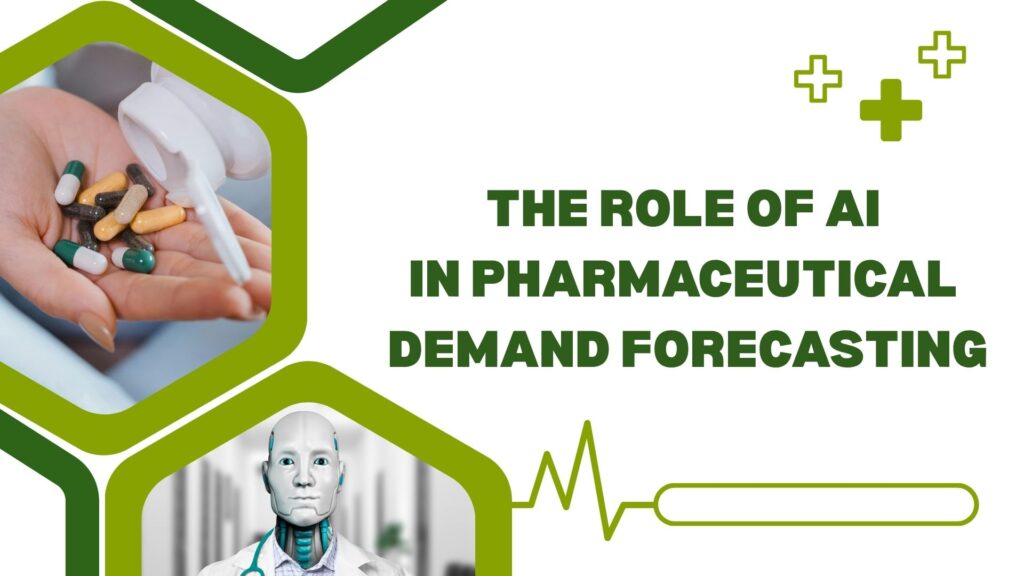
Pharmaceutical companies must balance product availability with inventory costs and wastage. Forecasting demand correctly can prove a challenge, particularly when supply chains face disruption or when seasonal illness impacts medication needs. Technologies such as robotics process automation in medical settings can help streamline repetitive data tasks, while artificial intelligence can analyze that data to improve pharmaceutical sales forecasting.
Role of AI in Pharmaceutical Demand Forecasting
AI plays a transformative role in pharmaceutical demand forecasting, in which machine learning algorithms can identify patterns that might not be readily apparent. Such models can analyze historical sales data, prescription trends, seasonal demand, availability by region, and other relevant factors to predict future requirements.
A pharmaceutical company that sells cold and flu remedies, for instance, might watch sales figures for seasonal patterns while factoring in outbreaks of viral illnesses or vaccination campaigns. AI would allow organizations to stay ahead of demand and adjust forecasts as needed.
Organizations that use a machine learning consulting partner can choose the right forecasting models based on their medical products and target markets. Such technology can forecast demand down to specific medications, regions, distributors, or even end-user healthcare facilities. Furthermore, AI can pair with robotics process automation in medical settings, where RPA tools collect and share data about inventory, sales, and enterprise resource planning. AI can analyze that information to generate insights and forecasts.
Key Features of AI-Based Forecasting
Several key features make AI forecasting valuable for the pharmaceutical industry:
- Real-time analysis: AI models can analyze up-to-date data rather than historical reports.
- Pattern recognition: Machine learning algorithms can recognize connections between sales, seasonality, prescriptions, and geography.
- Predictive capabilities: AI can predict future demand for medications while identifying products that might soon see increased or decreased consumption.
- Scenario modeling: Businesses can use AI to prepare for any number of demand scenarios, such as surges, shortages, and promotions.
- Process automation: Forecasting does not exist in isolation, as procurement and inventory management rely on sales projections. Robotics process automation in medical facilities, logistics operations, and pharmaceutical supply chains can create automated rules for repetitive tasks.
- Self-learning: AI models can update themselves based on new data, ensuring that forecasts remain relevant.
Benefits of AI in Demand Forecasting
AI allows pharmaceutical companies to anticipate demand more effectively by analyzing a variety of factors. This enables businesses to identify rising demand earlier, helping them stay ahead of shortages. Furthermore, more accurate projections can reduce inventory wastage. Excess inventory runs the risk of expiring, presenting a financial burden to the organization.
In terms of the pharmaceutical supply chain, AI can help manufacturers, distributors, pharmacies, and healthcare facilities better anticipate demand. The U.S. Food and Drug Administration contains information about pharmaceutical logistics and supply chains. In addition, AI can augment Medical Scribe Software by analyzing broader healthcare data, so long as organizations invest in appropriate privacy and security measures.
Data Used by AI for Forecasting
AI forecasting relies on data, and pharmaceutical organizations can use a variety of information. At a minimum, models need historical sales data for the products in their portfolio. Other relevant data includes prescription and dispensary trends, distributor orders, inventory levels and expiration dates, seasonal and geographic demand patterns, pricing and promotional strategies, and manufacturing capabilities. Furthermore, pharmaceutical companies can use epidemiological trends about disease to inform AI forecasting models. The World Health Organization contains valuable data about health trends that can, in turn, augment AI demand forecasting. In addition, Custom AI chatbot Development can create interactive AI tools that enable human analysts to ask questions and receive answers about inventory and demand forecasts.
Challenges and Limitations
AI does not guarantee accurate forecasting, as technology works only as well as the data that it ingests. Data scientists and pharmaceutical organizations must ensure that they train AI models on high-quality data. More importantly, historical data may not reflect future events, such as epidemics, legislative changes, and supply chain disruptions. Furthermore, AI forecasting might lack transparency, and pharmaceutical organizations may need to conduct a root-cause analysis before taking any significant action based on AI recommendations. The same applies to cybersecurity considerations, as businesses should ensure that models do not contain sensitive or protected information.
AI forecasting does require expertise to implement, and pharmaceutical companies can use a machine learning consulting partner to advise them on the most viable approach. Even then, pharmaceutical demand planners still play a critical role in the process by providing their expertise. While AI models can ingest data, only humans can identify the nuances in market trends. Therefore, businesses should consider an augmented analytics approach wherein AI forecasts inform human decisions rather than replacing them.
How AI Reduces Inventory Shortages and Wastage
AI enables pharmaceutical organizations to anticipate demand, reducing the likelihood of shortages and excess inventory. Forecasting tools can analyze demand trends to inform procurement and manufacturing schedules. At the same time, AI helps organizations avoid overestimating demand and creating a surplus of products.
AI can work in tandem with robotics process automation in medical settings to create self-learning inventory management systems. For example, an RPA tool can collect and organize inventory data before sending it to an AI forecasting model. The latter can then recognize patterns and send alerts when supply levels might fall below demand.

How Accurate Is AI Compared With Traditional Forecasting?
AI forecasting has the potential to surpass traditional methods, but that does not mean that it replaces them. AI works best with large amounts of data, making it well-suited for products with extensive historical sales data. At the same time, statistical analysis works well for slow-moving or stable products. Furthermore, forecasting accuracy depends on the product, the time horizon, and the models utilized in either approach. Therefore, pharmaceutical organizations can benefit from testing various methods rather than adopting AI exclusively. Agentic AI consulting can be beneficial, as the right systems can analyze demand trends and recommend actions while still allowing human supervisors to approve any significant changes.
Future Scope of AI in Pharmaceuticals
The future of Artificial intelligence in pharma looks bright, as emerging systems can ingest and analyze even more data. Forecasting systems can take into account not only sales data but also manufacturing capabilities, supply chain logistics, and epidemiology. Agent-based models can analyze demand trends and suggest changes to procurement, production, or inventory management. Agentic AI consulting can prove invaluable in this space by helping organizations implement such systems.
Artificial intelligence in pharma can go beyond demand forecasting and address broader healthcare administration needs. For instance, analytics tools can flag fraudulent billing practices such as Preventing Medical Billing Fraud and upcoding, while separate AI models analyze demand trends. Looking ahead, natural language processing can make AI more accessible, as Custom AI chatbot Development can create chatbots that enable human analysts to ask questions about demand forecasts rather than sifting through dashboards to obtain insights.
As the pharmaceutical industry embraces digitization, robotics process automation in medical settings creates opportunities to automate repetitive tasks. AI takes over data analysis and forecasting while providing human supervisors with recommendations. Together, such technologies can transform pharmaceutical demand forecasting, supply chain logistics, and inventory management. However, AI still requires quality data and human expertise to optimize the forecasting process.
Conclusion
AI has the potential to transform pharmaceutical demand forecasting and planning. By analyzing a broad range of data, recognizing patterns, and generating forecasts, artificial intelligence can help pharmaceutical companies minimize inventory costs and wastage. Combined with robotics process automation in medical fields and human expertise, AI can become a powerful tool for pharmaceutical demand planning and forecasting in the years ahead.
FAQs
How does AI improve pharmaceutical demand forecasting?
What data is required for AI-based pharmaceutical forecasting?
Can AI reduce pharmaceutical inventory shortages?
Can AI reduce pharmaceutical wastage?
Is AI always more accurate than traditional forecasting?
What is the future of AI in pharmaceutical demand forecasting?