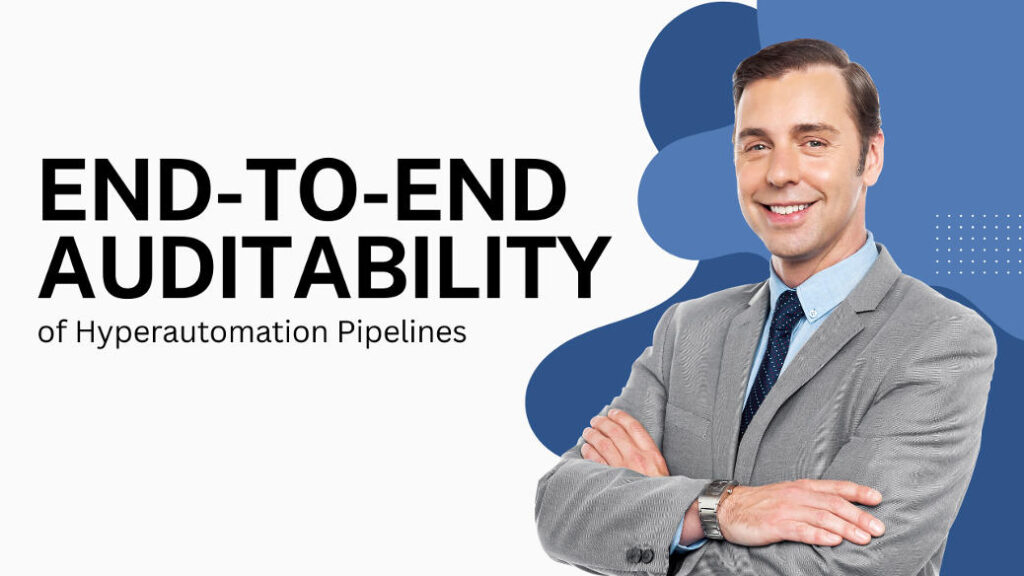
The hyper-intelligent workflow automation requires auditing and reporting in companies that have a highly regulated business environment. With the growth in the use of end-to-end intelligent automation solutions, integrating AI, RPA, analytics, and low-code solutions by enterprises, regulators have increased expectations of transparency, accountability, and control. This manual covers the role of enterprises in effectively auditing hyperautomation programs, responding to compliance risks, and generating reports that would be satisfactory to regulators. Addressing the needs of compliance leaders, CIOs, automation architects, and enterprises using low-code and no-code solution-based application development and automated testing solutions for enterprises to meet the changing regulatory demands, this article provides the best practices, governance frameworks, tools, and reporting solutions that will be used to meet the dynamic regulatory demands with confidence.
Understanding Hyperautomation In A Regulatory Environment
Hyperautomation is more than automation and integrates several technologies: RPA, AI/ML, decision engines, process mining, and analytics into workflows that are self-optimizing and intelligent. Though this is a way to achieve efficiency, agility, and scalability, it also brings some new compliance issues.
Regulators do not pay particular attention to the system uptime or access controls only. They now examine:
- The way automated decisions are made.
- The bias and explainability of AI models.
- The flow of data in automated processes.
- Whose responsibility is the failure of automation?
This change renders the organized audit and report a significant element of any hyper automation strategy.
The Rationality Of Regulatory Audits Of Hyperautomation
Organizations are required to illustrate:
- Automated workflow transparency.
- Logging of decisions and information flow.
- Responsibility in human and machine behavior.
- Control consistency, testing, and good governance.
Lack of audit of hyper-intelligent workflow automation may result in regulatory fines, legal liability, reputation loss, and operational interference. Conversely, audit-ready automation is proactively designed, and therefore, the organization is considered to be trustworthy and competitive to the regulators.
Important Auditing Hyperautomation Systems Challenges
Compared to traditional IT or process audits, auditing hyper automation is more complex since it is dynamic. Common Challenges Include:
- Intelligent models in AI.
- Workflows developed by the citizens with low-code and no-code platforms.
- Multi-vendor cross-platform orchestration.
- Ongoing implementation of bots and decision rules.
- Human-machine hybridic decision-making.
To solve these problems, it would be necessary to have a specifically designed audit framework that would be effective in hyperautomation environments.
Core Components Of Hyperautomation Audit Framework
Complete Automation Inventory
The initial auditing process is the identification and documentation of all the automated processes.
Every workflow is to be cataloged with:
- Business reasonableness and regulation influence.
- Process owner and technical owner.
- Involved systems and applications.
- AI Decision Engine(s) in use.
- Sources of input and output data.
Process mining tools come in particularly handy in this case because they show the real execution pathways and not the presumed workflow.
Structures of Governance and Control
Compliance is based on strong governance.
The auditors usually scrutinize:
- Bots and user role-based access controls.
- Credentialing and identity separation.
- Automation deployment approval.
- Change management policies
- Procedures Incident response.
To provide uniformity in governance within each department and location, a centralized automation Center of Excellence (CoE) is in place.
AI Accountability and Explicability
Explainable and auditable decisions are expected by regulators when automation is concerned with AI or machine learning.
The audit requirements are usually:
- Evidence of the logic of decisions.
- Training data sources, test methods, and model training data.
- Discrimination identification and mitigation measures.
- Humans in the loop over-riding systems.
Training and retraining records
Intelligible AI dashboards allow the auditors to know why a particular automated decision was made at a particular time.
Privacy and Security of Data Compliance
The privacy controls are often a key area of investigation during audits because hyperautomation often deals with sensitive data.
Auditors review:
- Minimization and anonymization practices of data.
- Data rest and data transit encryption standards.
- Control of consent and purpose limitation.
- Data retention and retention policies.
- Conformity to GDPR, HIPAA, SOC 2, ISO 27001, and country standards.
Incorporating the rules of compliance into automated processes eliminates the chance of breaking the rules.
Change management and version control
Since the environments of hyperautomation evolve so fast, auditors pay close attention to the way the updates are handled.
Key audit evidence includes:
- Bots and workflow version histories.
- Test and approval records.
- Rollback mechanisms and contingency mechanisms.
- Deployment logs
This is where automated enterprise testing solutions come in and make sure that compliance risk is not introduced by changes.
Significance Of Automated Testing In Audit Readiness
A basic element of compliant hyperautomation is automated testing.
It facilitates regulatory audits by:
- Certifies business regulations before implementation.
- Identifies backward-moving changes.
- Models regulatory situations.
- Prepares test artifacts, which are audit evidence.
Enterprises can maintain the presence of compliance by means of constant implementation of testing in CI/CD pipelines, which means that compliance is not to be documented in the past but rather implemented in the present.
Regulations Of Low-Code No-Code Application Development
No-code or low-code application development speeds up the innovation process; however, without good governance, it poses governance risks.
Best practices in audits are:
- Imposed standards and templates of development.
- Limited rights of deployment of productions.
- The compulsory logging and surveillance.
- Automations developed by citizens are centrally reviewed.
Low-code platforms can enhance auditability; in fact, when managed correctly, they standardize and document automation logic.
Reporting Hyper Automation Under Regulatory Requirements
What Regulators are looking at in Reports
Hyperautomation regulatory reports must be clear to show:
- Automated processes scope and objectives.
- Risk mapping and risk control.
- AI decision transparency
- Exception handling and exception paths.
- History and remedies of the incidents.
- The reporting should be real, auditable, and replicable.
Best Practices of Regulator-Ready Reporting
To enhance the level of clarity and efficiency:
- Utilise dashboards in place of non-dynamic documents.
- Including the visual process maps and the execution logs.
- Conform to accepted regulatory systems.
- Have central storage of evidence.
Reporting tools that are based on automation greatly minimize the manual reporting work and enhance accuracy.
Constant Supervision vs. Intermittent Audits
Continuous compliance is also becoming the preferred method of regulation by modern regulators.
The advantages of Continuous Monitoring are:
- Real-time anomaly detection
- Early detection of non-compliances.
- Faster regulatory response
- Reduced audit fatigue
The workflow automation platforms are now supporting an in-built monitoring and alerting in line with the compliance controls.

Role Of An End-to-End Intelligent Automation Solutions Firm
Collaboration with an established end-to-end intelligent automation solutions firm will assist enterprises in remaining audit-ready at scale.
Such firms offer:
- Ready-made compliance systems.
- Regulatory experience in the industry.
- Secure and scalable automation architecture.
- Inbuilt audit trail and records.
- Continued compliance advisory assistance.
This alliance brings compliance as a bottleneck to strategic enablers.
Specific Compliance Within The Industry
Financial Services
- SOX, PCI-DSS, AML, compliance, KYC.
- Elaboration in credit and risk decisions.
Healthcare
- HIPAA and data protection of patients.
- CST Clinical decision traceability.
Manufacturing
- Validation records and quality management records.
- Traceability over end-to-end processes.
Public Sector
- Mandates on transparency and accountability.
- Requirements of data sovereignty.
- Audit planning according to industry rules is a key to success.
Hyperautomation Auditing In The Future
With changing regulations, hyperautomation audits will also be smarter.
Emerging trends include:
- AI-driven audit bots
- Self-recording automation processes.
- Dashboards of real-time regulators.
- Scoring compliance maturity in automation.
The next stage of compliant digital transformation will be dominated by enterprises that build auditability into automation design.

Conclusion
The process of auditing and reporting on hyperautomation processes is no longer a choice, but a requirement as mandated by the regulations. With a mix of good governance, explainable AI, automated testing solutions for enterprises, and constant monitoring, organizations will be assured of scaling hyper-intelligent workflow automation and fulfilling regulatory requirements. Through a proper approach and a well-established end-to-end intelligent automation solutions firm, compliance is a source of sustainable growth, not a hindrance to innovation.
FAQs
What is hyperautomation auditing?
What is the need for explainable AI in the regulated automation?
What benefits do automated testing solutions have in relation to compliance?
Does low-code no-code automation meet the regulations?
What is the frequency of hyperautomation audits?
Why do business with an end-to-end intelligent automation solutions company?